Showing posts with label Surrey. Show all posts

Monday, 30 October 2023

HALLOWEEN SPECIAL: THE HOUND OF THE BASKERVILLES

 A story about a curse on a family involving a giant man-killing hound seems a perfect subject for a Halloween special.  The story is by Arthur Conan Doyle featuring the detective Sherlock Holmes.  The family in question are the Baskervilles, and the curse dates from the days of the English Civil War, when Sir Hugo Baskerville kidnapped a farmer’s daughter.  Sir Hugo is killed by a spectral hound, a fate which befalls a number of subsequent Baskervilles. 

The story has been turned into film a number of times over the years, firstly in 1939, which was mostly studio-based, then in 1959, in a film starring horror stalwarts Christopher Lee and Peter Cushing, with filming taking place in Surrey, at Frensham Ponds and Chobham Common.  More recently, a TV movie in 1988 starring Jeremy Brett as Holmes, was filmed in a number of locations in the Midlands and North (although the original story was based in Dartmoor).

In the 1988 film, The Heath House in Tean, Staffordshire doubled as Baskerville Hall, while Mobberley Old Hall near Knutsford, Cheshire, provided some of the interior shots.  Croxteth Hall on Merseyside leant one of its rooms to be used as a hotel room.  The hotel in the film was called The Northumberland Hotel.  The railway scenes were filmed at Pickering railway station, one of the terminii of the North Yorkshire Moors Railway.  Just outside Harrogate lie Brimham Rocks.  This is the area used as the moors around Baskerville Hall, where Watson shoots the hound. 

The Heath House-geograph-4049368. Photo by Dennis Thorley, via Wikimedia Commons.


The Heath House is a Gothic Revival building, which in 2021 was featured in Country Life magazine, being up for sale for 6 and a quarter million pounds.  The estate was described as a ‘farm’, but the magazine commented that it was more Downton Abbey than dirty wellies.  Tean lies just off the A50, to the south-east of Cheadle.  Mobberley Old Hall dates from the 17th century, and lies in the village of Mobberley in Cheshire, a short distance from Knutsford.  Croxteth Hall is just outside Liverpool and offers a function room and parkland open to visitors.  It was formerly the ancestral home of the Molyneux family, the Earls of Sefton.  Pickering railway station is the terminus of the North Yorkshire Moors Railway, a magnificent line which wends its way down to the coast at Whitby.  Brimham Rocks, run by the National Trust, is a beauty spot to the north-west of Harrogate and south-west of Ripon featuring dramatic rock formations.

Brimham Rocks turtle and eagle. Photo by Geertivp, via Wikimedia Commons.

The Hound of the Baskervilles is currently available to view on ITVX.


Friday, 25 December 2020

WHEN IS CORNWALL NOT CORNWALL? REBECCA 2020


I read Daphne Du Maurier’s Rebecca for the first time this year during lockdown.  I wasn’t sure what to expect, but I found it to be one of the most amazing stories ever written.  Inevitably, such a famous novel found its way to the big and small screen, most famously in 1940 with Laurence Olivier playing the tragic Mr de Winter and Joan Fontaine playing his socially awkward second wife, struggling to step into the footsteps of the first Mrs de Winter, the Rebecca of the title. Shortly after I read the novel I learned that a new version was to be released, with Armie Hammer playing opposite Lily James, and with Kristin Scott Thomas as the forbidding head housekeeper Danvers.


I rushed to watch this new version, in anticipation of seeing some familiar scenes from my native Cornwall,  However, it turns out that just about anywhere other than Cornwall was used for the locations (at least the film used UK locations, unlike the 1940 version, which was largely filmed in California). 


As in the original, the film kicks off in the South of France, but the hotel suite occupied by the dreadful Mrs Van Hopper and the “new Mrs de Winter-to-be” is not in France at all, but was filmed at Waddesdon Manor in Buckinghamshire, which has a suitably chateau-like appearance.  The Manor was built by Baron Ferdinand de Rothschild in 1877 as a summer bolt-hole for entertaining.


                                  Waddesdonterrace. Photo by Giano, via Wikimedia Commons.

The first glimpse of Manderley as the newly weds drive up to the property was filmed at Cranborne Manor, midway between Wimborne Minster and Salisbury.  The great entrance hall where the couple are greeted by the servants was filmed at Hatfield House, Hertfordshire, which was also used for a pivotal point in the story when Mrs de Winter mark 2 is tricked into choosing an ill-advised costume for the summer ball she and Max are hosting at Manderley.  The painting which provides the inspiration for the outfit is in real life a portrait of Mrs Hugh Hammersley, which is to be found in Hatfield House.  The Persian rugs and wood panelled walls seen in the interior scenes were also from Hatfield.    


Cranborne Manor - geograph.org.uk - 1223951.  Photo by Mike Searle, via Wikimedia Commons.

As Mrs de Winter is seen exploring Manderley, there are many works of art in view.  Some of these are from the interior of Petworth House, West Sussex, which was used for some of the scenes.  Meanwhile, for Rebecca’s wing of Manderley, which has been kept as a shrine to her by Danvers, we are transported to Dorset, to Mapperton House, which is also where the accident with the precious porcelain was filmed.  The East Wing bedrooms, however, are from Loseley House near Guildford.

In the ‘downstairs’ part of Manderley, where the servants hang out, we see the basement kitchen and the corridors leading to and from it.  The kitchen area of Osterley House in the London Borough of Hounslow was used for these scenes, with some crockery and food items added in to complete the scene.  Osterley House also provided the stables for the scene in which Mrs de Winter was persuaded to try her hand at horse riding by Rebecca’s cousin, Jack Favell (Sam Riley). 


                                 Osterley Park 800. Photo by Sannse, via Wikimedia Commons.

For me, the biggest disappointment of the filming locations, given the gorgeousness of the Cornish coast, is that the coastal scenes were filmed outside the county, specifically at Hartland Quay, North Devon, recognisable from its unusual rock formations.


                Hartland Quay - panoramio (3). Photo by Matt Prosser, via Wikimedia Commons.

Waddesdon Manor is about five miles north-west of Aylesbury and is open to visitors, with advance booking only during the coronavirus pandemic.  The beautiful grounds include an aviary housing a range of exotic birds.  The house is a repository for an extensive collection of art, in particular 18th century French pieces, this being a favourite period of the Rothschilds. 

Cranborne Manor, just outside the village of Cranborne, is notable for its gardens, originally from a design by John Tradescant in the 17th century and rediscovered in the 19th century, then replanted in the Arts and Crafts style a century later.  Visitors to the gardens also have access to a cafe and a shop.  Hatfield House, dating from 1611 and owned by the Cecil family for 400 years, has been used extensively in filming.  The house and gardens are open to visitors except for the winter season, when only the park and woodland walks, the cafe and shops are open. 

Petworth House is on the edge of the small town of Petworth, West Sussex.  This vast 17th century house and its grounds are run by the National Trust.  Works of art on display in the state rooms include paintings by Van Dyck, Turner, Reynolds and Gainsborough.  Mapperton House is near Beaminster in Dorset and is the home of the Earl and Countess of Sandwich.  Both the house and gardens are open to visitors.  Loseley Park lies just beyond the southern edge of Guildford, Surrey.  The gardens are open to visitors in the summer, and the property is also available for weddings.  In normal, non-covid, times the house can be visited on guided tours.

Osterley Park and House, run by the National Trust, lies between the M4 and the Great West Road just a few miles east of Heathrow Airport.  The house is in the neo-classical style, designed by Robert Adam and is surrounded by landscaped parklands and gardens.  Hartland Quay is at the western extreme of the North Devon coast, known for its rough seas during the winter months, which have been responsible for many shipwrecks over the years.  The distinctive layered rocks seen in the film are sedimentary rocks deposited during the Carboniferous period.

Friday, 1 May 2020

LOVELY SETTINGS FOR A LOVELESS MARRIAGE: THE DUCHESS


Lady Georgiana Spencer, an ancestor of Princess Diana, was born in Althorp, where the Princess is buried.  At the age of 17 she was married off to William Cavendish, 5th Duke of Devonshire, whereupon she became the Duchess of Devonshire.  On paper it sounds like a fairy tale for the young Georgiana, but unfortunately the Duke turned out to be a philanderer who was only interested in gaining a male heir.  Georgiana’s first two children, as sod’s law would have it, were female, but she finally managed a son the third time round.  Meanwhile, Georgiana became friendly with Lady Elizabeth Foster from Suffolk while on a visit to Bath.  Predictably, Elizabeth caught the roving eye of the Duke and she ended up in a ‘menage a trois’ with the pair of them, bearing two illegitimate children by him and finally becoming his wife three years after Georgiana’s death in 1806, only for the Duke to die two years later.  This saga is the subject of the 2008 film The Duchess, starring Keira Knightley as Georgiana and Ralph Fiennes as William. 

The scenes depicting Georgiana’s time at Althorp did not make use of the real-life Spencer family seat, but were filmed at Kedleston Hall in Derbyshire.   One twist to this whole sorry tale is that Georgiana fell madly in love with Charles Grey (played by Dominic Cooper), a Whig Party member who would later become Prime Minister, but in spite of William’s own infidelities he would not allow her to continue the liaison (which resulted in an illegitimate daughter).  In the film she is seen flirting with Charles, a scene filmed at the South Front of Kedleston Hall.  The scene in which her mother (Charlotte Rampling) is filmed meeting with William to persuade him of her daughter’s charms was filmed in the Library.  Another scene in which Georgiana’s hair catches fire was also filmed here, this time in the Marble Hall. 

File:Kedleston Hall 04.jpg
Kedleston Hall 04. Photo by Glen Bowman, via Wikimedia Commons.


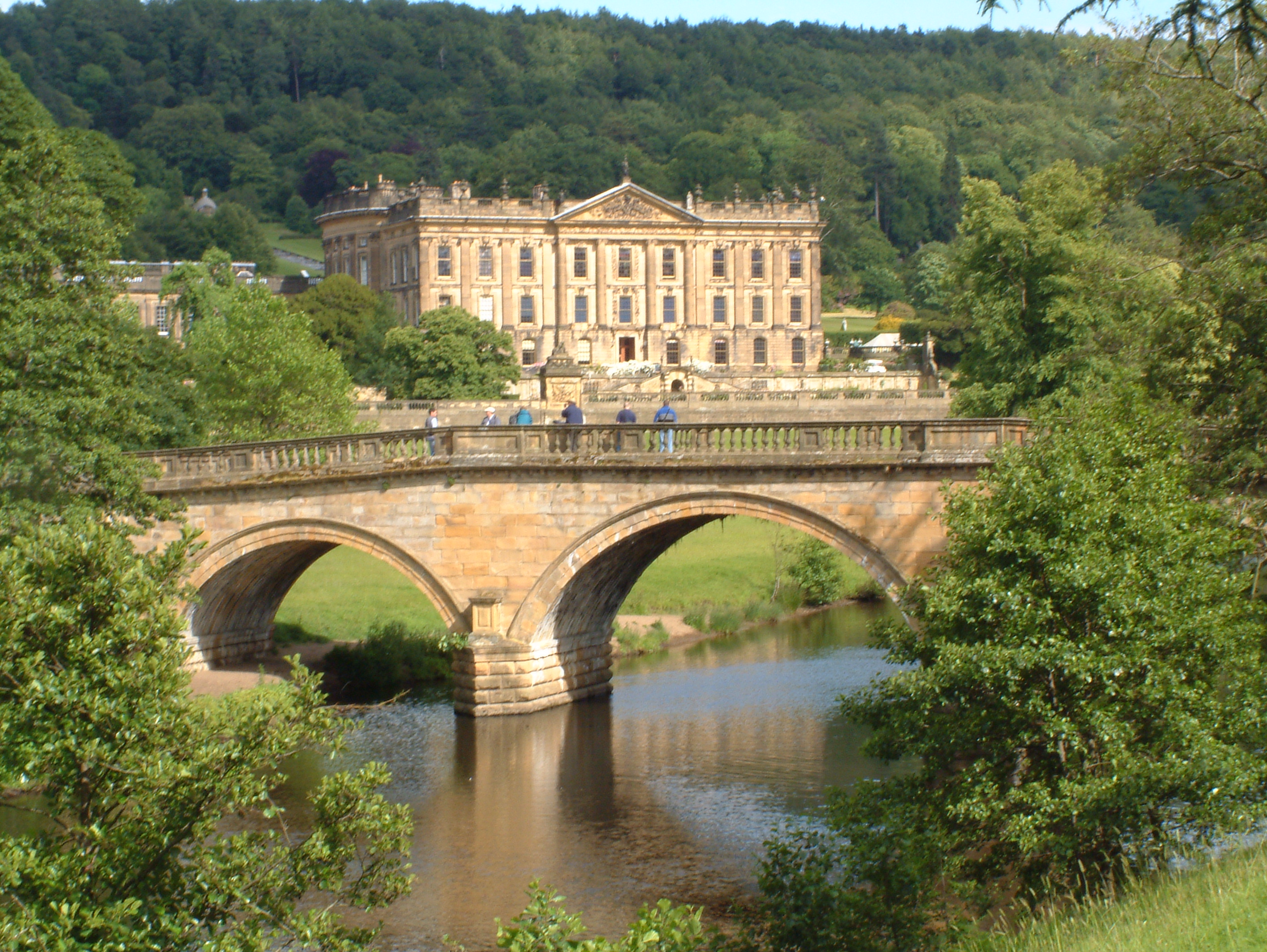
The country estate of the Dukes of Devonshire is Chatsworth House, one of Britain’s best-known stately homes.  Chatsworth played itself in the film when the wedding scenes were filmed there.  However, the Dukes had another base in London called Devonshire House in London’s Piccadilly.  The scenes depicting Devonshire House made use of a number of locations for the interior and exterior shots.  The original building was demolished in 1924, so the film-makers had to find an alternative for the exterior, and Somerset House in The Strand proved the perfect choice.  The interior scenes were all over the place, making further use of Kedleston for some scenes, plus Clandon Hall, Guildford, with Holkham Hall in Norfolk used to depict the dining room. The streets of London, in which the newly-weds are filmed trundling along in their carriage being cheered by crowds of people, are actually the grounds of the Old Royal Naval College in Greenwich.

File:Chatsworth Bridge.jpg
Chatsworth Bridge. Photo by Rob Bendall, via Wikimedia Commons.

In the scenes in which Georgiana goes to Bath to take the waters, this beautiful city gets to play itself, as the graceful Royal Crescent comes into view.  Another famous Bath landmark is the Assembly Rooms in Bennett Street.  The tea room forms the backdrop to the scene where Georgiana is presented to the throng and where she first meets Elizabeth.  However, the river scenes seen in this part of the film were not filmed in Bath, but back at Kedleston.

File:Royal Crescent, Bath 2014 04.jpg
Royal Crescent, Bath 2014 04. Photo by Mike Peel, via Wikimedia Commons.


Kedleston Hall, to the north-west of Derby, is an 18th century neo-classical house designed by Robert Adam and surrounded by sumptuous parkland.  The property is owned by the National Trust.  Chatsworth House, on the banks of the River Derwent near Bakewell, Derbyshire, is privately owned but open to visitors complete with retail and refreshment points.  The house was initially completed in 1708, with later additions the following century.  The extensive grounds include many interesting features, including fountains, a temple and a rectangular lake known as the Canal Pond.

Somerset House is a neo-classical building on the south side of The Strand in London.  It is been used for many purposes over the years, but its current role is principally as an arts centre.  The Old Royal Naval College dominates the banks of the River Thames in Greenwich.  A naval college since 1873, it forms part of the Maritime Greenwich UNESCO World Heritage Site.  The College has been used extensively in filming, proving useful to film-makers as a quieter alternative to Central London for street scenes, Clandon Park, to the north-east of Guildford, Surrey,  is owned by the National Trust, but unfortunately Clandon Hall itself was destroyed by a catastrophic fire in 2015 and still stands as a ruin today.  Holkham Hall is in Holkham in North Norfolk, famous for its vast sandy beach.  An 18th century house in the Palladian style surrounded by extensive parkland, it is privately owned but open to visitors.

The Royal Crescent in Bath was started in 1767 and consists of 30 Grade I listed terrace  houses.  For those wanting to immerse themselves in the Georgian spa town experience, part of the crescent has been given over to Bath’s poshest hotel, the Royal Crescent Hotel and Spa.  The Assembly Rooms, another National Trust property and designed in 1769, were the focal point of Georgian Bath’s social scene.  The building is used for functions and conferences, and can be visited when not in use.  There is also a Fashion Museum on the premises.  Both the Royal Crescent and The Assembly Rooms were designed by the architect John Wood, the Younger.

Monday, 23 December 2019

SHERE CHRISTMAS ROMANCE: THE HOLIDAY


Shere is the sort of village that automatically comes to mind when people think of rural England.  So it is no surprise that it has been used in films on several occasions.  As well as Bridget Jones, The Edge of Reason and Four Weddings and a Funeral, Shere was one of several picturesque locations featured in the Christmas romantic comedy The Holiday, in which two women, one American (Cameron Diaz  as Amanda) and one British (Kate Winslet as Iris) swap houses for the Christmas period to get over their respective broken hearts and find new love.


Shere lies in the Vale of Holmesdale between Guildford and Dorking in Surrey at the foot of the North Downs, and consists of an assortment of pretty cottages, two pubs, a church, a tearoom and a small museum.  A stream running through it with ducks completes the idyllic picture.  The cottage Iris lives in was built specially for the film on a hillside overlooking Shere, but it was inspired by a real one much further away.  Of course, no Christmas romantic comedy would be complete without a covering of snow, so the village is seen in the film with its white winter coat on (disregarding the fact that southern England very rarely gets snow over Christmas).

File:Church Hill, Shere - geograph.org.uk - 535227.jpg
Church Hill, Shere - geograph.org.uk - 535227. Photo by Colin Smith, via Wikimedia Commons


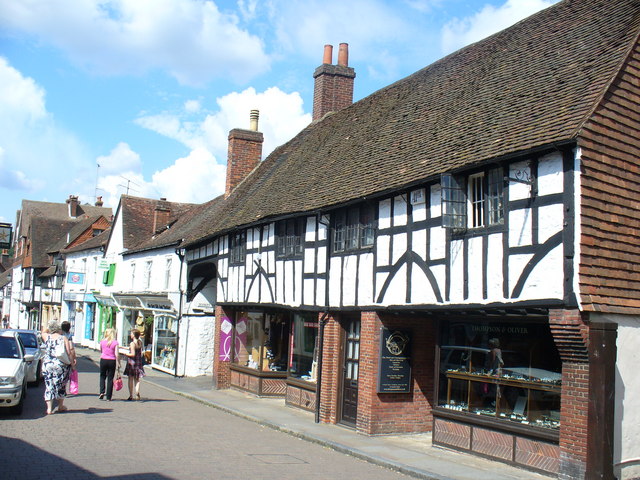
As well as Shere, the nearby town of Godalming is seen in some of the village scenes plus the railway station scene.  Church Street is seen adorned with Christmas decorations and snow as Amanda heads into town to do some shopping.  Bigger than Shere, but almost as picturesque, Godalming lies to the south of the River Wey, four miles from Guildford.  

File:Church Street, Godalming - geograph.org.uk - 1380443.jpg
Church Street, Godalming - geograph.org.uk - 1380443. Photo by Colin Smith, via Wikimedia Commons
Map of the area

Wednesday, 14 February 2018

VALENTINE SPECIAL: LOVE ON PAGE AND SCREEN


With Valentine’s Day upon us, I have come over all soppy and decided to share some British locations associated with some of the many romantic moments featured in our nation’s works of film, TV and literature.  So get out the heart-shaped chocolates and enjoy.


Gunwalloe, Cornwall: Dwight marries Caroline in Poldark


I have already described some of the Poldark locations in an earlier post, including the location of Nampara, where Ross and Demelza build their life together.  I do not tear up easily, but one scene in series 3 even got me going, when Caroline Penvenen and Dr. Dwight Ennis, after a seemingly doomed relationship, finally tied the knot.  The church where the wedding was filmed was the charming and very Cornish Church of St Winwaloe, nestled among the dunes in Gunwalloe near the Lizard Peninsula.  Being of a ‘three hall’ design, the present day church is thought to date from the 15th century, although the original chancel and nave were probably 13th century, and there is a Norman font.  

St Winwaloe Church and Church Cove - geograph.org.uk - 981092. Photo by Rod Allday, via Wikimedia Commons.


Valency Valley, Cornwall: Thomas Hardy meets his first wife


Staying in Cornwall, but this time near the north coast, the Valency Valley is a lush hideaway just inland from the picturesque harbour village of Boscastle.  Set in an isolated position on the northern slopes of the valley is the Church of St Juliot.  In 1870 Thomas Hardy, who at the time was an aspiring architect, arrived at the church to perform work on its restoration following the death of the person originally hired to do the job.  While there he met and fell in love with his first wife Emma, the rector’s sister-in-law and their courtship inspired one of his works, the novel ‘A Pair of Blue Eyes’. 


Mapperton House, Dorset: Bathsheba and her triangle of suitors


Continuing the Hardy theme, Bathsheba Everdene in Hardy’s Far From The Madding Crowd must surely be one of English literature’s most fascinating and complex characters, a woman ahead of her time for her fierce independence.  When she inherits a farmhouse and takes up residence there she find herself pursued by a trio of suitors: Gabriel Oak, a shepherd from her past who asks her to marry him but is rejected – although he gets his girl in the end; Sergeant Francis Troy, who succeeds in wooing her but turns out to be really bad news; and the lonely farmer William Boldwood, who Bathsheba foolishly leads on with a Valentine saying “Marry me” but who eventually succeeds in gaining her hand in marriage only for it to end in tragedy through a fatal spat with Troy.  The 2015 film version of the story, starring Carey Mulligan as Bathsheba, captures all this wooing and wedding perfectly.  Bathsheba’s farmhouse in the film is portrayed by Mapperton House near Beaminster in the Hardy county of Dorset, a Jacobean manor house and home to the Earl and Countess of Sandwich.  The house is open to visitors on guided tours only.


Mapperton House - geograph.org.uk - 517671. Photo by Chris Downer, via Wikimedia Commons.

Apple Tree Yard, London


The scene of the al fresco knee trembler involving Yvonne Carmichael and her mysterious lover in the book and TV series of the same name actually exists as Apple Tree Yard in real life.  It is an insignificant alleyway behind Jermyn Street in Mayfair.  However, the makers of the TV production were unable to use the yard for the series because of building work going on there for a major redevelopment, so a similar alleyway in the City had to be used instead. 


Romantic locations galore in Four Weddings and a Funeral


The 1994 romantic comedy Four Weddings and a Funeral, starring Hugh Grant and Andi McDowell, takes us on a tour of romantic locations in south-east England for the wedding scenes.  Wedding No. 1 takes place in St Michael’s Church, Betchworth near Reigate, with the reception filmed at a property named Goldingtons in Sarratt, Hertfordshire, which went up for sale in 2015 for a cool £4.5m.  No. 2 is conducted at the Old Royal Naval College in Greenwich, with Luton Hoo Estate near Luton being used for the reception.  The third wedding service was supposed to take place in Perthshire in the film, but was actually filmed at Albury Park, Guildford, Surrey, with the reception at Rotherfield Park near Alton, Hampshire.  The final wedding is scheduled to take place at St Bartholomew-the-Great in Clerkenwell, but turns into a non-wedding when Charles has second thoughts.


A wealth of stately homes: Pride and Prejudice


The 1995 version of Pride and Prejudice has Mr Darcy sneering at everyone in a lavish ballroom, meant to be the Netherfield Ballroom.  His dance with Lizzie on this occasion  marks the beginning of their romance.  Netherfield Park, where the scene takes place, is the home of Mr Bingley, a wealthy gentleman from the city, and the exterior of the property is represented by Edgecote House in Northamptonshire, while the ballroom scene was shot in the ballroom of Brocket Hall in Hertfordshire.  Later on in the series Darcy has an awkward encounter with Lizzie dressed in wet underclothes following a swim in a lake on a hot day.  This scene, which was voted one of the best on British TV, was shot at Lyme Park in Cheshire.


Teversal Manor, Nottinghamshire: Lady Chatterley's Lover


The racy novel by D H Lawrence, Lady Chatterley’s Lover, is centred on the tragic couple Lady Constance Chatterley and her paralysed husband Clifford.  At night Constance creeps from their  home, Wragby Hall, to spend time with her lover Oliver Mellors the gamekeeper.  The house believed to have provided the inspiration for Wragby Hall was Teversal Manor, near Mansfield, Nottinghamshire, which was put up for sale in 2013 for £1m.


Stokesay Court, Shropshire: Atonement


The novel Atonement by Ian McEwen explores the ill-fated romance between Cecilia Tallis and Robbie Turner, the son of the family’s cleaning lady.  In 2007 the novel was made into a film, and the Tallis family home which was the scene of the beginning of the couple’s romance was represented by Stokesay Court in Onibury, Shropshire, built by Victorian merchant John Derby Allcroft.  Not to be confused with the much older Stokesay Castle, an English Heritage site to the north, just south of Craven Arms.


Blackpool: a very Coronation Street romance


The fictional Coronation Street couple Roy and Hayley Cropper were once described as the greatest soap couple of all time.  They were also possibly the most unusual, given that Hayley started out as a bloke and was the first transgender character in a British soap opera.  Unfortunately, the romance between the two comes to a sad end when Hayley is diagnosed with terminal cancer.  Following the diagnosis the couple head to Blackpool to try and grab some last happiness together, for example dancing in the Tower Ballroom. Following Hayley’s death, Roy scatters her ashes in the sea at Blackpool.


Carnforth Station: Brief Encounter.


One of the most memorable images from 1940s British cinema is that of Trevor Howard and Celia Johnson gazing meaningfully into each other's eyes in a station cafe in Brief Encounter.   Those who want to relive that romantic moment should head for Carnforth, because it was the cafe at Carnforth Station, now known as the Brief Encounter Refreshment Room, which was used in the film with the station acting as Milford Junction.  It is a fitting name, because at that time Carnforth was a major junction in the railway system of the north-west, and during the war thousands of servicemen passed through on the way to their overseas destinations.  However, Carnforth was a victim of the Beeching rail cuts in the 1960s, and the station was turned into a mere branch line station with a lot of the buildings from its heyday falling derelict.  Recent restoration work has resulted in the opening of the Carnforth Station Heritage Centre, incorporating that famous cafe.

File:Carnforth Station waiting room.jpg
Carnforth Station waiting room. Photo by Deben Dave, via Wikimedia Commons.


High Sunderland Hall, Yorkshire: Wuthering Heights


Wuthering Heights, the property at the heart of Emily Bronte’s novel of the same name, is the scene of a classic story of love and revenge, charting the doomed love affair between Catherine Earnshaw, the daughter of the property’s owner, and the dark and brooding Heathcliff, an orphan boy brought by Earnshaw to live with the family following a trip to Liverpool.  The inspiration for the exterior of Wuthering Heights is thought to be High Sunderland Hall near Halifax, while the location of the property is assumed to be Top Withens, the site of a ruined farmhouse near the Bronte family’s home village, Haworth.


Tretower Court, Powys: The Libertine


The Libertine, starring Johnny Depp, is a historical romp centred on a drunken, sex-mad poet called John Wilmot, or the Earl of Rochester, a friend of King Charles II.  Wilmot falls in love with an actress he has decided to make into a star.  Much of the film was made in the Isle of Man for tax purposes, but several key scenes were filmed at the 14th century Tretower Court, a medieval courtyard house and adjoining castle near Crickhowell, Powys.   Apparently Depp joined some of the locals for a drink at the Bear Hotel, where some of the crew members were staying.


Cumbernauld: Gregory's Girl.


Gregory’s Girl, released in 1981, is a romantic comedy with a Scottish accent which launched the film acting career of John Gordon Sinclair, who was just 19 at the time of filming.  Much of the action takes place in and around the New Town of Cumbernauld in North Lanarkshire.  The site was designated for a New Town in 1955, and the town has since grown to be the ninth most populated locality in Scotland.  Among the industries which have grown up around this population are the studios for the TV series Outlander, which makes much use of the surrounding area.

Tuesday, 1 August 2017

BOURNE TO FIGHT: GLADIATOR HITS SURREY


During the spread of the Roman Empire large swathes of Europe came under the rule of these powerful conquerors.  Traditionally associated with Southern Europe and the Mediterranean, it is easy to forget that the Empire also spread to more northern regions, from our own Britannia in the west to Eastern Europe and the shores of the Baltic.  Germania was the name given to the part of the Empire mostly inhabited by Germanic peoples, and it extended from the Danube to the Baltic and from the Rhine to the Vistula. 

Gladiator, directed by Ridley Scott,  is one of my favourite films, mainly for the superb acting by Russell Crowe as Maximus and by Joaquin Phoenix as Commodus (he was robbed at the Oscars in my opinion), not to mention the late, lamented hellraisers Richard Harris and Oliver Reed, who actually died during filming.  Some amazing computer and filming wizardry brought Reed back to life for the scenes involving him which were yet to be filmed. 

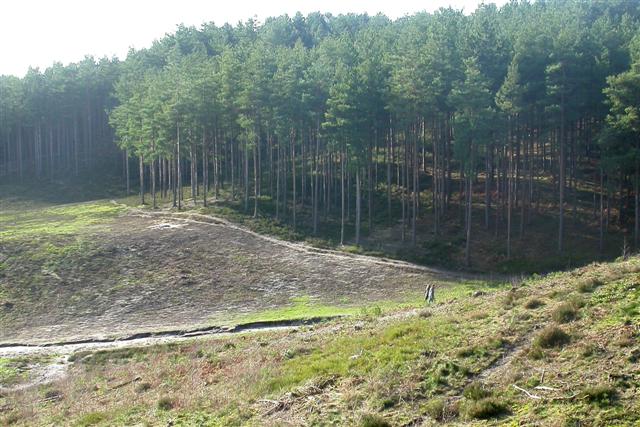
However, the film is also notable for its camerawork, making use of an array of stunning locations.  The stirring opening scene of Gladiator, depicting a battle in the forests of Germania set to the warlike music of Hanz Zimmer, was actually filmed in Surrey, in an area south of Farnham known as Bourne Wood, an area of mainly coniferous woodland.  The woods here have been purposely designated as a filming area, the Forestry Commission allowing them to be used for this purpose for up to 8 months a year, subject to certain restrictions such as the use of helicopters.  Other films making use of the woods include Harry Potter and the Half-Blood Prince, Harry Potter and the Deathly Hallows, Ridley Scott’s Robin Hood and War Horse.  On the small screen the woods featured in the miniseries Band of Brothers, and they were used as jungle for It Ain’t Half Hot Mum.  They also appear in a number of adverts and in the video for Coldplay’s The Scientist.


File:Bourne Wood - geograph.org.uk - 317184.jpg
Bourne Wood - geograph.org.uk - 317184. Photo by Ben Gamble, via Wikimedia Commons

Thursday, 19 November 2015

HOLLYWOOD MEETS THE HOME COUNTIES: MY WEEK WITH MARILYN


In 2014 Eddie Redmayne had his finest hour so far in The Theory of Everything, starring as Stephen Hawking.  However a few years before Redmayne appeared in another excellent film called My Week With Marilyn. The film centres around the visit to the UK in 1956 by Marilyn Monroe (Michelle Williams) and her new husband Arthur Miller for the making of The Prince And The Showgirl with Laurence Olivier (Kenneth Branagh), whose patronising attitude towards Marilyn leads to a prickly relationship. Redmayne plays the part of an aspiring film-maker called Colin Clark who is working on the film,  and who finds himself looking after Marilyn when Arthur departs for Paris.  The real-life Colin Clark chronicled his blissful week with the great star in his diaries ‘My Week With Marilyn’, which followed an earlier account of the wider visit by the star called ‘The Prince, the Showgirl and Me’ – the film is based on both of these accounts.  

Apart from the brilliant cast of the film, which also includes Judi Dench, the film features a wide variety of locations in south-east England, including several in the Home Counties. Marilyn and Arthur flew in to London Airport in 1956 (the precursor to Heathrow), which in the film is represented by White Waltham Airfield, one of the oldest airfields in the country, located 2 miles south-west of Maidenhead.  While in Britain, the couple stayed at Parkside House on the edge of the village of Englefield Green in Surrey, and the makers of My Week With Marilyn managed to do some of the filming there, including the shot of the newly-weds standing in the doorway of the house.  It was Clark who was dispatched to look for a suitable property within easy reach of Pinewood Studios, where The Prince and the Showgirl was being made, and what he found was a large Regency house set in a secluded location adjoining Windsor Great Park and set in 10 acres of grounds, including the rose garden where the newly-weds held a photo call.  Other famous people who have stayed at the house include Dame Margot Fonteyn and Rudolf Nureyev.

File:St Simon and St Jude, Englefield Green - geograph.org.uk - 1521391.jpg
St  Simon and St Jude, Englefield Green - geograph.org.uk - 1521391. Photo by Michael FORD, via Wikimedia Commons

During Marilyn’s week with Clark, he takes her to Windsor Castle.  Some of the interior shots of this episode plus the castle grounds were shot at Hatfield House in Hertfordshire.  This Jacobean property has been home to the Cecil family ever since it was built in 1611 by Robert Cecil, the 1st Earl of Salisbury and Chief Minister to King James I.  The present-day building is located at the site of an earlier building, the Royal Palace of Hatfield, which was the childhood  home of Queen Elizabeth I.  The building was given to Cecil by Elizabeth's successor James I because he did not like it much, and it was Cecil's fondness for instigating building work that led to its transformation into what is seen today.  The 42 acres of gardens were created in the 17th century by John Tradescant the elder, who introduced plants new to England and added a number of features including a maze, fountains, water parterres and terraces.  One feature of the grounds known as Broad Water is where the skinny dipping scene was filmed.  Fans of Johnny Depp should be familiar with Hatfield House, since several of his films were made there, including Charlie and the Chocolate Factory, Sleepy Hollow and Mortdecai.  Hatfield House is open to visitors, but is currently closed, although the shops and restaurant are still open along with Hatfield Park Farm and Bloody Hollow.  The house and estate reopen in March.

File:Hatfield House - geograph.org.uk - 760240.jpg
Hatfield House - geograph.org.uk - 760240. Photo by Pam Fray, via Wikimedia Commons

Clark also takes Marilyn to his old school, Eton College, which was also where one of the interior shots depicting Windsor Castle was filmed, in which Marilyn puts on a show for the Windsor staff.   Coincidentally Eddie Redmayne also attended Eton.   The college was founded by Henry VI as a place of free learning for poor boys who would then go on to King’s College, Cambridge.  Somewhat different to today, as Eton is now a preferred choice of schooling for the likes of royalty and future politicians.  Eton has been used for many films over the years, including Chariots of Fire, The Madness of King George and Shakespeare In Love, to name but a few.
File:Eton College quadrangle.jpg
Eton College quadrangle. Photo by jtriefen, via Wikimedia Commons