Showing posts with label East Lothian. Show all posts

Sunday, 13 October 2024

THREE LOCATIONS USED IN THE 2018 FILM MARY QUEEN OF SCOTS

 There have been a number of films made over the years about the relationship between Queen Elizabeth I and her first cousin once removed Mary Stuart, better known as Mary Queen of Scots.  One of the more recent films stars Saoirse Ronan as Mary and Margot Robbie as Elizabeth.  Here are three of the locations used in the film.

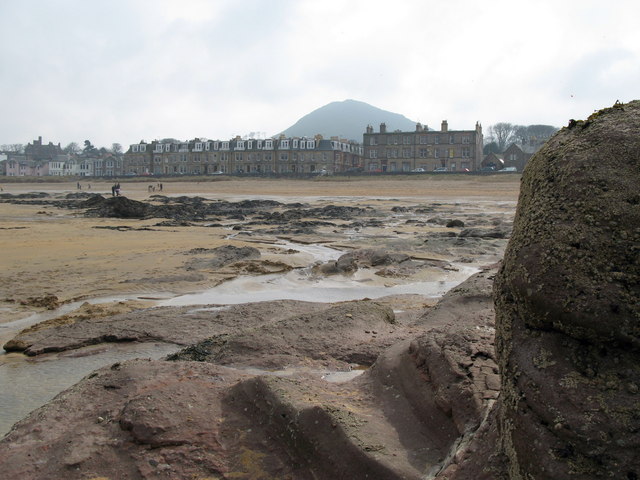
The film opens with Mary’s return to Scotland from France, where she had briefly been Queen, but her reign ended with the death of her husband Francis.  The ship carrying Mary landed at Leith on the outskirts of Edinburgh in 1561.  The beach used in this scene in the film is Seacliff Beach, North Berwick, a pleasant seaside town in East Lothian, a bit further south.

After landing at Leith Mary makes her way to Holyrood House in Edinburgh.  The exterior of Holyrood in the film was shot at Blackness Castle near Linlithgow.  Situated on a promontory on the south bank of the River Forth, just upstream from the Forth Road Bridge, Blackness Castle is a 15th century castle owned by Historic Environment Scotland and is open to visitors year round.  The castle was originally built as a residence for the Crichtons, one of Scotland’s most powerful families at the time. 

Blackness Castle - geograph.org.uk - 1238628. Photo by Mike Pennington, via Wikimedia Commons.


Meanwhile, Elizabeth is based at Hampton Court Palace on the outskirts of London.  The exterior of the palace in the film was represented by the magnificent Hardwick Hall near Chesterfield in Derbyshire.  We see the tall facade of the building and the formal garden fronting it.  Hardwick Hall is owned by the National Trust, and among its treasures are some fine tapestries.  The cafe downstairs offers a range of tasty meals, coffees, teas and cakes. The property is fully open until the end of October, and partially open thereafter.

Hardwick Hall - geograph.org.uk - 3339472. Photo by Chris Heaton, via Wikimedia Commons.


Sunday, 4 January 2015

FROM BURMA TO NORTH BERWICK: THE RAILWAY MAN


One of the most brutal episodes in the Far East during the Second World War was the forced labour visited by the Japanese on the allied prisoners of war who were taken to Kanchanaburi to participate in the building of the Burma Railway.  The railway is often referred to as the Death Railway due to the unimaginable numbers of fatalities which occurred during its construction: around 90,000 Asian labourers and 12,399 allied POWs perished.  One of those who survived was Eric Lomax, a British Army officer born in Edinburgh.  Although he did survive, he did not come out of it unscathed, as the 'demons' and the nightmares arising from his experience stayed with him well beyond his return to Britain.  Lomax is the 'Railway Man', the main character in a recent film based on Lomax's autobiography of the same name, with Colin Firth in the main role.

One of the film's main themes is the romance which develops between Lomax and a young woman called Patti (Nicole Kidman) after they meet, appropriately, on a train. It is Patti who helps Lomax confront his wartime demons.  The scene in which the couple are married was shot at St Monans Parish Church, a simple but striking place of worship in the Kingdom of Fife, which dates back to the 9th century.  The church occupies a lovely spot right next to the sea in St Monans, a former fishing village which is now popular with yachting enthusiasts.  Once married, they are seen making their life together at their home in a bracing beachfront location.  The filmakers chose Tantallon Terrace in North Berwick for the Lomax home.  The terrace is named after one of the big draws in the area, Tantallon Castle, which lies a few miles along the coast on a clifftop opposite the spectacular Bass Rock, a magnet for seabirds which is accessible via the boat trips offered by the Scottish Seabird Centre in North Berwick.  North Berwick is a harbour town whose most venerable building is the 12th century Auld Kirk, which in the 16th century was the scene of the North Berwick Witch Trials.  

File:Marine Parade, North Berwick - geograph.org.uk - 376591.jpg
Marine Parade, North Berwick - geograph.org.uk - 376591. Photo by Lisa Jarvis, via Wikimedia Commons.


 Aside from the above locations, Perth Railway Station plays a starring role, standing in for Crewe station, at which Lomax boards the train where he meets Patti, and again for Edinburgh Waverley Station.  Calton Hill in Edinburgh also gets a look in, with its unfinished 'acropolis' monument.  The hill is renowned for its magnificent views over the city. The Bo'ness and Kinneil Railway played a pivotal role in the meeting of Lomax and Patti; this heritage railway covers five miles of track between Bo'ness and Manuel Junction near the village of Whitecross, Falkirk.  Another iconic sight, which features in the film's trailer, is the Glenfinnan Viaduct.  This impressive structure, which is used by the Jacobite steam train, may be familiar to film buffs, as it was also used in the Harry Potter films (see my post 'Pottering Around on the Jacobite Steam Train', from 23 December 2013). 

File:Bo'ness Railway Station - geograph.org.uk - 1072827.jpg
Bo'ness Railway Station - geograph.org.uk - 1072827. Photo by Henry Clark, via Wikimedia Commons.