Showing posts with label Cambridgeshire. Show all posts

Monday, 15 July 2024

MINCING WORDS: THE KING'S SPEECH

The King’s Speech is an unusual film about a late member of the Royal Family, in that it focuses on one particular aspect of the monarch’s persona.  King George VI, aka Bertie, (played by Colin Firth, who won the Oscar for Best Actor), father of the late Queen Elizabeth II, suffered from a stammer, which being the King was a problem with all the speeches he was expected to make.  An Australian speech therapist called Lionel Logue (Geoffrey Rush) was engaged to help the King overcome this affliction, and this is the central theme of the film. Here are some of the locations used in three key scenes of the film.

The opening scene depicts the occasion of the closing ceremony of the Empire Exhibition at Wembley Stadium, which took place in 1925.  Bertie, still a Duke at this point, gives a speech which proves excruciating as he stammers his way through it, with his wife Elizabeth Bowes-Lyon (aka The Queen Mother, played by Helena Bonham Carter) looking on in distress for her husband.  I came across a lost recording of the actual 1925 speech, which, though not great, did not sound nearly as bad as Colin Firth’s version.  Anyhow, as to the location of the scene, it was filmed at Elland Road Stadium in Leeds, home of Leeds United football team, with some shots filmed at the Odsal Stadium, home of the Bradford Bulls rugby team.  The people of Leeds got an early look at the film when it featured in the 2010 Leeds International Film Festival.

Elland Road 2023 cropped. Photo by Arne Müseler, via Wikimedia Commons.
 

Following the death of his father, Bertie has to endure the occasion of his Coronation, which in real life took place in Westminster Abbey, but for the purposes of the film the Coronation scenes and the scenes of the preparation for the occasion were shot at Ely Cathedral in Cambridgeshire.  The cathedral has been used in a number of top films, including Elizabeth: The Golden Age, The Other Boleyn Girl and Macbeth, as well as the Netflix series The Crown.    

Ely Cathedral


With Bertie installed as King, war breaks out against Germany, and Bertie is faced with having to make a broadcast to the nation, and Lionel Logue is summoned to Buckingham Palace to prepare him for the broadcast.  The interior of Buckingham Palace was filmed at Lancaster House, a government-owned building in London, which was rented at a cost of £20,000 a day for the filming.

Lancaster House from St James's Park London. Photo by Ricardalovesmonuments, via Wikimedia Commons.

Elland Road Stadium lies to the south-west of Leeds, near the M621.  The venue offers behind-the-scenes tours and the opportunity to purchase club merchandise.  Odsal Stadium is to the south of Bradford, near the A6036.  As well as rugby matches, the stadium hosts live music events.  Ely is one of the country’s smallest cathedral cities, located in the Fenland district of Cambridgeshire, with a picturesque riverside on the banks of the River Great Ouse.  The cathedral dates back to the 11th century.  Lancaster House is run by the Foreign, Commonwealth and Development Office.  It was formerly known as York House, having been commissioned by the Duke of York in 1825.  Its sumptuous interior includes a Long Gallery, State Drawing Room and the Green Room.


Monday, 5 June 2023

WINGS OVER THE SOUTH-EAST: BATTLE OF BRITAIN

 As I write this, it’s a Bank Holiday weekend, and predictably for such times there is a classic British war film on the TV: Battle of Britain (1969).  With a cast that reads like a Who’s Who of famous actors of the 60s – Sir Michael Caine, Sir Lawrence Olivier, Christopher Plummer, Kenneth More, Ian McShane, Suzannah York, the list goes on – the film does what it says on the tin, telling the story of the struggle for air superiority over the Germans during the Second World War, culminating in the battle of the title.  Not surprisingly, the filming locations which feature in the film are mostly former RAF air bases – and with a pub thrown in.  There are also aerial shots of the south coast, with the white cliffs putting in an appearance.

First up we have Duxford, a former RAF/RAAF airfield in Cambridgeshire.  Filming took place there in 1968, seven years after it ceased operations as a military airfield.  Construction of the buildings on the airfield started in 1918, carried out by German prisoners-of-war.  During the Second World War the airfield played a crucial role in repelling air attacks by the Germans in the real-life Battle of Britain.  During the filming of Battle of Britain, one of the original World War I hangars was blown up, apparently without the agreement of the Ministry of Defence.  Nowadays Duxford acts as an outpost of the Imperial War Museum, housing The Fighter Collection and the Historic Aircraft Collection.  It is also the location of the American Air Museum.

Duxford, Cambridgeshire - geograph.org.uk - 2603257. Photo by Brendan and Ruth McCartney, via Wikimedia Commons.

Moving across to Essex, we come to RAF Debden near Saffron Walden, opened in 1937, which housed an Operations Block for No. 11 Group during the Battle of Britain, when it came under attack several times.  Peter Townsend, one time beau of Princess Margaret, was commander of 85 Squadron during the Battle, and he wrote a book about it called “Duel of Eagles”.  Also in Essex is RAF North Weald, established in 1916 and an important fighter station during the Battle of Britain.  More recently, the airfield has been used as a base for the Air Ambulance and the National Police Air Service.  Like Duxford, the airfield has its own museum, telling the story of the people who worked there during the two world wars.

Leaving Essex, we head to Kent and RAF Hawkinge, another with its own museum, run by the Kent Battle of Britain Musem Trust.  The base had already been in existence for 20 years when the Battle of Britain began.  Hawkinge’s significance in the Battle lay in the fact that it was the nearest RAF station to occupied France, located just inland from Folkestone, just 6 minutes’ flying time from the French coast.  Another  base which put in an appearance in the film was Bovingdon, a former bomber airfield to the south-west of Hemel Hempstead.

Finally, we come to the pub.  There is a scene in the film involving Squadron Leader Colin Harvey (Christopher Plummer) and his wife Section Officer Maggie (Susannah York), in which they argue about Maggie’s relocating closer to Colin’s posting.  The scene takes place in The Jackdaw Inn in Denton, a few miles north of Folkestone, Kent.  The pub makes the most of its connection to the film with wartime RAF memorabilia and vintage posters such as the one declaring “Don’t Help the Enemy!  Careless Talk May Give Away Vital Secrets”, a poster which can be seen in the background in the film sequence.

Denton, The Jackdaw Inn (geograph 3228308). Photo by Helmut Zozmann, via Wikimedia Commons.


Friday, 4 March 2022

FROM UNI TO KGB: RED JOAN/CAMBRIDGE


Cambridge University has a long and unfortunate association with the dark art of spying, most notably the group known as the Cambridge Five, including Guy Burgess and Kim Philby among its members, all of them male.  The film Red Joan tells the story of a female undergraduate who was lured into spying.  Melita Norwood, born in 1912, was the longest serving of all Soviet spies in Britain, handing over secrets during a 40-year period which included details of the atomic bomb, an “achievement” which made her more highly valued to the KGB than the infamous Cambridge Five, comprising five male Cambridge undergraduates. Norwood’s story was the inspiration for the novel Red Joan by Jennie Rooney, which became the basis for the 2019 film of the same name, starring Judi Dench.


Although Norwood never attended Cambridge University, this seat of learning was the setting of the novel, and much of the filming for the film took place there.  This was in part because the director Trevor Nunn came to know the city while studying there.


Three of the University colleges featured in the film: St John’s College,  Newnham College and Downing College.  Jennie Rooney attended St John’s College while studying at Cambridge, and the scenes shot there included the one featuring a visit to the top of the chapel tower to admire the view and the one involving a picnic on the River Cam.  The crew had to be reduced to a maximum of 15 people for the filming at St John’s. 

Located on St John’s Street off Bridge Street, St John’s lies on a site originally occupied by the Hospital of St John the Evangelist.  The varied architecture includes the crenelated Great Gate and the famous Bridge of Sighs, one of the most photographed buildings in Cambridge.  The college received its charter in April 1511, and its notable alumni include William Wilberforce, who was responsible for the abolition of the slave trade,  and the actor Derek Jacobi. The college is currently closed to visitors.


St John's College, Cambridge 10052014-002. Photo by Yamen, via Wikimedia Commons.


Newnham College, the University’s first all-female college, was the one attended by Red Joan in the film, and was used for scenes shot inside the accommodation block and a night-time scene.  Founded in 1871, the college is housed in a handsome red brick building on Sidgwick Avenue to the south-west of the city centre.  Previous alumnae include the actress Dame Emma Thompson, the writer Sylvia Plath and the Labour MP Diane Abbott.  The college gardens are currently open to visitors, subject to restrictions.


Filming at Downing College featured the outside, which is on a busy road, so that the production team had to stop the traffic and remove any modern bikes which were parked outside.  Downing College was founded in 1800 and its buildings of pale honey-coloured stone were built in the neo-classical style.  Notable alumni include the actor John Cleese, the late film director Michael Winner and this film’s director Trevor Nunn.  Downing College is currently closed to visitors.

Downing College Chapel. Photo by Herbert Baker, via Wikimedia Commons.


Among the other establishments used for the filming is the All Saints Garden, which was used for the scene in which a group of students hold a rally against the Spanish Civil War.  The garden forms part of All Saints Church on Jesus Lane, opposite Trinity and St John’s colleges. There is a weekly art and craft market held on the site.

Map of the city.

Monday, 13 July 2020

A TOUR OF ENGLAND'S FINEST CATHEDRALS: ELIZABETH AND ELIZABETH:THE GOLDEN AGE


Any film about events in English history will inevitably be chock-full of some of the finest examples of English heritage.  In the films Elizabeth (1998) and its sequel Elizabeth: The Golden Age (2007), both starring Cate Blanchett as Queen Elizabeth I, it is some of the country’s finest cathedrals that come to the fore among the locations used.

In Elizabeth, the coronation scene was filmed at York Minster, which proved a splendid substitute for Westminster Abbey, where the actual coronation took place on 15 January 1559.  The Minster lies in the centre of this historic city, and due to the flat terrain in the area surrounding it can be seen from miles around.  There has been a place of worship at this spot since the 7th century, but it was not until 732 that the first Archbishop of York was recognised by the Pope.  The present building took a massive 250 years to complete, starting in 1220 and ending in 1472.  The Minster brought shocking images to our TV screens in 1984 when a fire which started in the south transept raged out of control, and firefighters were forced to deliberately collapse the roof to save the rest of the building.

York Minster from M&S. Photo by Matze Trier, via Wikimedia Commons.


The other cathedral which  makes an appearance in Elizabeth is Durham Cathedral.  The cathedral plays the part of the royal palace, and its distinctive pillars are seen in the scene where Elizabeth searches for Lord Robert after receiving a message.  Like York Minster, Durham Cathedral was preceded by a humbler place of worship known as the Saxon ‘White Church’.  The present-day building, which makes for a picturesque sight overlooking the River Wear, was built between 1093 and 1133, with further additions thereafter.

Durham Cathedral Nave. Photo by Michael D Beckwith, via Wikimedia Commons.


In Elizabeth: The Golden Age we are taken further south, with Ely Cathedral in Cambridgeshire playing an important role as the Palace of Whitehall, which in those days was the main residence of the monarchs of the day.  It is seen in a number of scenes, such as the one where Elizabeth confronts the Spanish Ambassador, and when Sir Walter Raleigh arrives bearing gifts from the New World.  Ely Cathedral is unusual in that, unlike most cathedral cities, Ely is the size of a small town.  In fact, the cathedral came before the town, which grew up around it.  There is a slate in the cathedral marking the location of a former shrine to Ethelreda, daughter of the King of East Anglia, who founded an abbey at the location of what is now the cathedral.  The building dates from 1083, and was granted cathedral status in 1109.

Ely Cathedral Choir East View. Photo by Michael D Beckwith, via Wikimedia Commons.


The sequel covers the period leading up to, and including the country’s spat with Spain, and Westminster Cathedral transports us over the water to the court of King Philip II, as it was where the scenes were filmed featuring the ranting king, plotting his invasion of England following the execution of Mary, Queen of Scots.  As a Roman Catholic cathedral, Westminster Cathedral was a good choice.  The cathedral is much younger than the others used in the two films, with construction completed in 1903.  Its main distinguishing feature is the striped appearance of its exterior, fashioned from layers of brick and stone.

Westminster.cathedral.frontview.london.arp. Photo by Arpingstone, via Wikimedia Commons


One of the most dramatic scenes in the sequel is the attempt on Queen Elizabeth’s life by Thomas Babington (Eddie Redmayne), an event which is pure fiction, since in reality this particular individual did not get anywhere near the Queen, although it is true that there was a plot to assassinate her.  The scene in question was filmed in Winchester Cathedral.  Originally founded in 642 and known as Old Minster, the present-day cathedral was started in 1079 at a site nearby, and the Old Minster was demolished in 1093.  The cathedral has the distinction of being one of the largest in Europe, and includes many notable features, such as the 17th century choir screen designed by Inigo Jones.

Winchester Cathedral Nave 1, Hampshire, UK - Diliff. Photo by David Iliff, via Wikimedia Commons.


Finally, for the main entrance to Whitehall Palace as seen in the sequel, the producers made use of Wells Cathedral, specifically the staircase linking the North Transept to Chapter House.  Like Ely, Wells is another unusually small cathedral city, nestling among the green fields of the Somerset countryside.  The cathedral was built to replace an earlier church which had occupied the site since 705, and construction spanned the period from 1176 to 1450.  One of the cathedral’s best known features is its astronomical clock dating from around 1325.

Wells cathedral chapter house brighter. Photo by Lamiai, via Wikimedia Commons.


Tuesday, 3 February 2015

PINING FOR THE CAM: RUPERT BROOKE AND GRANTCHESTER


When in the beautiful university city of Cambridge, if you want to escape the hubbub of the centre you should make your way along the banks of the Cam to the village of Grantchester, a riverside settlement with charming pubs and cottages.  Probably the best known building in the village is The Orchard Tea Garden, which is known in literary and academic circles as the place where a group of talented friends known as the Grantchester Group used to congregate.  The group included philosophers Bertrand Russell and Ludwig Wittgenstein, writers E. M. Forster and Viriginia Woolf, the economist Maynard Keynes, the artist Augustus John and the poet Rupert Brooke.

Brooke, who moved into Orchard House in 1909, was a central figure to the group.  His boyish good looks and floppy hair once moved the Irish poet W. B. Yeats to describe him as the "handsomest young man in England".  This was a peaceful period when hedonism was the order of the day, and the group led an idyllic existence, skinny dipping in the river and hanging out together in the orchard.  On one occasion Brooke and Virginia Woolf swam naked by moonlight in a weir pool known as Byron's Pool, a reminder of  an earlier poetic presence in the village.  However, as was the case for so many people, the fun ended abruptly in 1914 with the onset of World War I.  Brooke entered the war by joining the Navy, and he sailed with the British Mediterranean Expeditionary Force in 1915.  Tragically, he died of sepsis brought on by an infected mosquito bite while moored off the Greek island of Skyros.  He was buried there, and the grave remains on the island to this day.  

File:River Cam at Grantchester - geograph.org.uk - 808244.jpg
River Cam at Grantchester - geograph.org.uk - 808244. Photo by Trevor Peach, via Wikimedia Commons
 
In May 1912 Brooke found himself in Berlin, and was so overcome with nostalgia for Grantchester that he penned a poem called 'The Old Vicarage, Grantchester'.  In the poem he recalls wistfully the flowers in the garden: "And in my flower-beds I think//Smile the carnation and the pink".  Suffering from the Berlin heat, he longs for the cool river back home: "The stream mysterious glides beneath//Green as a dream and deep as death", and "And there the shadowed waters fresh//Lean up to embrace the naked flesh".  He then pokes fun at the Germans and their rules and regulations: "Meads towards Haslingfield and Coton//Where das Betreten's not verboten."  (an allusion to the German mania of the time for banning people from walking on grass).  He also has a go at the inhabitants of the other neighbourhoods in and around Cambridge, accusing them of being miserable, as in the lines "Strong men have run for miles and miles//When one from Cherry Hinton smiles", in contrast to Grantchester, where "They love the Good, they worship Truth//They laugh uproariously in youth".  

File:Grantchester Mill Pond - geograph.org.uk - 649084.jpg
Grantchester Mill Pond - geograph.org.uk - 649084. Photo by Sebastian Ballard, via Wikimedia Commons


The Orchard Tea Garden still serves tea to thirsty passers-by today, and the wooden tea pavilion still stands there.  For those who want something stronger, the pleasant selection of pubs in the village includes one named after Rupert Brooke.  The walk to Grantchester is an easy 2-mile hike along well-worn riverside paths taking in the verdant stretch known as Grantchester Meadows.       

File:The Red Lion - geograph.org.uk - 649097.jpg
The Red Lion - geograph.org.uk - 649097. Photo by Sebastian Ballard, via Wikimedia Commons
Map of the area.

Sunday, 29 June 2014

SNAPSHOTS OF 17TH CENTURY LONDON: SAMUEL PEPYS


Of all the many books I have read over the years, one of the most enjoyable consisted of the day-to-day ramblings of an ale-swilling, philandering but very capable civil servant.  The diary of Samuel Pepys, who rose through the ranks to occupy an important role in the Administration of the Navy, and later became an MP, although only covering a decade of his life, provides not only a fascinating insight into the life of 17th century London, but also a running commentary on some of the most significant events in the city's history, including the Black Death and the Great Fire of London.

Pepys was born on 23 February 1633 in Salisbury Court, a street leading from Fleet Street towards the River Thames.  The street was once the main carriage entrance to the medieval palace of the Bishops of Salisbury.  The area was destroyed during the Great Fire, but Salisbury Court still exists as a street, and there is a blue plaque declaring that "In a house on this site Samuel Pepys, diarist, was born".  Pepys' education included a stint at St Paul's School, still in existence and located in the riverside suburb of Barnes in south-west London.  He went on to study at Cambridge University.

Pepys started keeping his diary at the beginning of 1660, and during this first year he was appointed to the Navy Board.  During this time he lived and worked in Seething Lane, which is just to the west of Tower Hill Underground Station, where there is a bust commemorating him.  This location actually survived the Great Fire, only to succumb to a later fire in 1673.  Again, a blue plaque marks the spot.  His leisure time included visits to the 'coffee houses' which were gaining popularity at that time, and he was an avid theatre-goer.  An entry in his diary in September 1661 talks of a visit to his local theatre, Salisbury Court Theatre, to view a performance of 'Tis a Pity She's a Whore' during which, true to form, he was distracted from the proceedings on the stage by the attractive females in the audience.  

File:Bust of Samuel Pepys, Seething Lane, London EC3 - geograph.org.uk - 1077498.jpg
Bust of Samuel Pepys, Seething Lane, London EC3 - geograph.org.uk - 1077498. Photo by John Salmon, via Wikimedia Commons

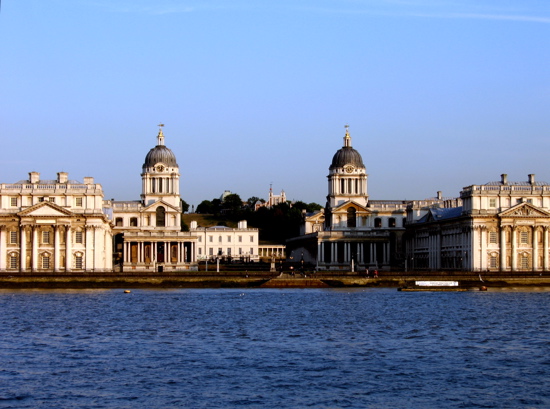
His job with the Navy took Pepys to a number of locations outside London, and even abroad in his early career, when he was sent to the Netherlands to bring Charles II back from exile.  His diary entry for 30 April 1660 describes a visit to Deal on the Kent coast, which he dismisses as 'a very pitiful town'.  His negative image seems to have derived mostly from the fact that the town came up short on the ale front: “We went to Fuller’s (the famous place for ale), but they have none but what was in the vat.”  Nevertheless, the day ended with much drinking and bonhomie aboard the ships in port.   However, Pepys was much more taken with 'Maydstone' (now Maidstone), a Kent town on the River Medway, which he found "very pretty as most towns I ever saw, though not very big, and people of good fashion in it". As the running of the naval dockyards fell within Pepys' remit, he spent a lot of time in the environs of Medway and the Thames, where most of the dockyard activity was centred.  At Upnor on the Medway Pepys describes the “great disorder by multitude of servants and old decrepid men, which must be remedied”.  Another regular haunt was Deptford on the Thames, where the first of the Royal Dockyards was built.  His visit to Deptford overnight from 11-12 January 1660 was enlivened by "a rising of Fanatiques" in response to which "seamen of all the ships present repair to us, and there we armed every one with a handspike, with which they were as fierce as could be".  Pepys made many visits to Greenwich, another Thames location with a strong naval pedigree.  The Navy Office was moved to Greenwich in August 1665, and Pepys stayed in lodgings nearby for a while.

File:2005-06-27 - United Kingdom - England - London - Greenwich.jpg
2005-06-27 - United Kingdom - England - London - Greenwich - CC-BY 4887324365. Photo by CGP Grey, via Wikimedia Commons

After the period covered by the diary, Pepys went on to have an eventful life, including being imprisoned for Jacobitism in 1690.  In 1701 he moved to a house in Clapham, and he died there two years later.  However, he was buried back in London, alongside his wife and one of his brothers, at St Olave's Church in Hart Street in the City of London, which he refers to in the diary as "our own church".  As for the diary itself, the original manuscript survives to this day, and is kept in the Pepys Library at his Cambridge college, Magdalene College.

File:PepysLibraryCambridge.jpg
PepysLibraryCambridge. Photo by Andrew Dunn, via Wikimedia Commons