Wednesday, 11 September 2019

BIRDS OF A FEATHER: DAUGHTERS-IN-LAW, JOANNA TROLLOPE/THE SUFFOLK COAST


Anyone planning a break on the Suffolk coast will find reading Joanna Trollope’s Daughters-in-Law the perfect scene-setter for their trip.  This story about a mother-in-law’s complex and fraught relationship with her three daughters-in-law is mainly set around the portion of the Suffolk coast between Shingle Street near Orford and RSPB Minsmere, a haven for birdwatchers.  It certainly brought back happy memories of a break my husband and I spent in the area a few years ago.


The most pivotal part of the story, in which one of the daughters-in-law, Petra, meets someone, risking a break-up to her marriage, takes place at the RSPB Minsmere bird reserve, to which Petra, who is keen on drawing birds, escapes for the day when feeling the heat in her relationship.  She takes herself off to commune with the avocets “picking their fastidious way around the Scrape” and observes the ‘other man’, RSPB ranger Steve, moving around among the marram grass and sand dunes and “silhouetted against the shining water”.   

File:Minsmere - geograph.org.uk - 321676.jpg
Minsmere - geograph.org.uk - 321676. Photo by Mike Pennington, via Wikimedia Commons
Another location which forms part of the story, also good for observing birdlife, is the hamlet of Shingle Street near Orford, where Petra sets up home with husband Ralph in his cottage “right on the shingle”, before later moving to Aldeburgh.  Later in the story it is revealed that Steve lives in Shingle Street, where he has a whitewashed cottage “sunk deeply into the beach”. 


The other Suffolk coastal location which looms large in the story is the town of Aldeburgh.  The parents-in-law live in a house near there, and Petra and Ralph move from Shingle Street to the town part-way through the story.  We have Petra taking her kids into town to escape from Ralph’s moods, past the cottages with names like Shrimper’s Cottage or Mermaid Cottage.  The famous scallop shell sculpture on the beach, commemorating Benjamin Britten, gets a mention elsewhere in the story, as well as the southern end of town “where the tall seafront terraces petered out into the marshy stretches of mingled river and sea”.

The mouth of the River Alde at sunset

Aldeburgh is a characterful seaside town just north of the mouth of the River Alde, which is at its best at sunset, when the river gleams in the orange glow of the setting sun.  The High Street, as hinted at in the novel, is a pleasant mix of small shops, galleries, restaurants cafes and pubs.  Benjamin Britten lived in Crag House in the town from 1947, hence the aforementioned commemorative sculpture.


RSPB Minsmere hosts a variety of birds in its coastal lagoons, such as the slender avocet, bearded tits and bitterns.  There are also otters present in the reedbed pools.  The reserve is close to the Sizewell nuclear power station, and sadly recent reports suggested that the planned Sizewell C station could threaten the future of the reserve.  This weekend the RSPB is holding a Love Minsmere festival to raise awareness of the concerns.  Shingle Street is another favourite with birdwatchers, and recent sightings have included Western Cattle Egret, American/Pacific Golden Plover and Red-Necked Phalarope. 

Map of Aldeburgh. 

Tuesday, 20 August 2019

WOMEN OF WINDERMERE: DEEP WATER/THE LAKE DISTRICT


Deep Water follows the lives of three women, Lisa, Kate and Roz, all living among the beautiful scenery of the Lake District, but whose lives are considerably less perfect than the surrounding landscape.  Much of the filming took place around Lake Windermere, which forms a watery backdrop to many of the scenes.  Which is appropriate enough, as the series is based on the Windermere series of novels by Paula Daly.

File:Sunset in Bowness Harbour, Bowness on Windermere, England 02.jpg
Sunset in Bowness Harbour, Bowness On Windermere, England. Photo by Michal Klajban, via Wikimedia Commons.


One of the most striking properties used in the filming is the house where Kate (Roslind Eleazar) lives, set in an elevated position overlooking the lake.  The real-life property is near the village of Hawkshead, near the western shore of the lake.  Anna Friel’s character Lisa, meanwhile, lives in the countryside near the lake.   The kennels she runs are seen surrounded by the dramatic slopes which are a feature of this area.  Roz’s house is in the village of Staveley, a couple of miles to the east of the lake along the A591.  Staveley Primary School was used for the school gate scenes which form the common denominator between the three women.


There is a lakeside cafe which in the series is where Roz’s brother works and which is the scene of a number of meet-ups such as in episode 1, where Kate meets Lisa to discuss her son’s bullying.  The cafe which was used for these scenes is the Bluebird Cafe on Coniston Water, named after the jet-powered boat which killed Donald Campbell as he attempted to break the water speed record on the lake in 1967.  


File:Bluebird Cafe - geograph.org.uk - 900291.jpg
Bluebird Café - geograph.org.uk - 900291. Photo by David Palmer, via Wikimedia Commons.


Lake Windermere is the largest of the Lake District lakes, as well as being the largest natural lake in England.  The main tourist centres are Bowness-on-Windermere and Ambleside, and there are frequent departures on leisure boats linking the two, as well as Lakeside at the southern end.  Coniston Water is a short distance to the west of Lake Windermere.  The National Trust runs trips on the restored Steam Yacht Gondola, which leaves from a pier near the Bluebird Cafe.  Hawkshead is a village a short distance from the west shore of Lake Windermere with a good range of pubs and cafes, as well as an array of shops, including a large branch of the Hawkshead outdoor clothing and equipment chain.

Map of the area.

Friday, 9 August 2019

A TALE OF LOSS IN NORTHERN IRELAND: PHILOMENA/COUNTY DOWN


Philomena, starring Judy Dench and Steve Coogan, is a film based on the true story of a woman from Northern Ireland called Philomena Lee (Dench) who had a son out of wedlock, which led to her being sent to a convent.  The son was taken away from her and ended up in America.  The film centres on Philomena’s search for her son with the help of TV presenter Martin Sixsmith (Coogan). 

A large proportion of the film is set in America, where Philomena and Martin go in search of the lost son, but in the early scenes we are treated to the sight of the Mourne Mountains and surrounding area.  In the scene where Martin picks up Philomena to take her to the convent to quiz the nuns about her son, we see a sign saying ‘Birr’.  There is a town called Birr in County Offaly, Republic of Ireland, but the scene was actually filmed in Rostrevor on Carlingford Lough, close to the Mourne Mountains, and Philomena is seen waiting opposite the Killowen Inn on Bridge Street.

File:Rostrevor (elevated view) - geograph.org.uk - 278010.jpg
Rostrevor (elevated view) - geograph.org.uk - 278010. Photo by Albert Bridge, via Wikimedia Commons


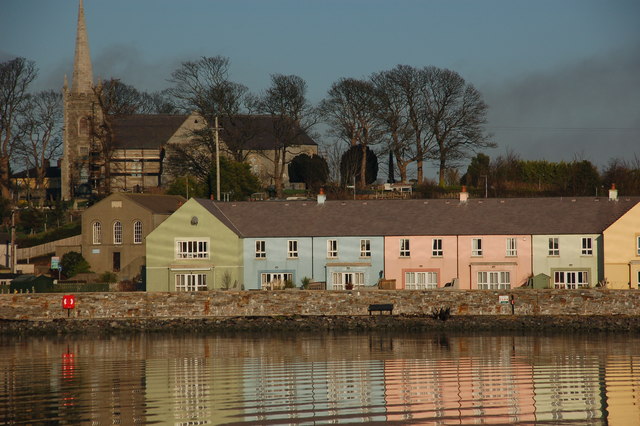
Further north in the county, in Killyleagh, the Dufferin Arms pub was used in the scene where Philomena and Martin discover that there was a fire which destroyed the convent’s records, while suspiciously leaving the convent itself intact.  The landlord of the pub was so chuffed at his hostelry being chosen for the scene that a party was held to celebrate the premiere of the film.  


Killyleagh harbour (1) - geograph.org.uk - 296250. Photo by Albert Bridge, via Wikimedia Commons

Fans of the film who head to Northern Ireland in search of filming locations should not waste their time looking for the real-life version of Roscrea Convent, where Philomena had to give up her son.  The building used to depict the convent was actually Harefield House in Harefield near Uxbridge, Greater London, conveniently located close to Pinewood Studios.  In the film there is a smaller red brick building visible to the right of the front of the convent.  This is in another place altogether, on the estate of Shirburn Castle near Thame, Oxfordshire, and was added in with the help of computer graphics technology.  The cemetery scene was also filmed on the estate.  Note that neither of these properties are open to the public.


The Mountains of Mourne are a constant presence overlooking the coastal areas between Newcastle, County Down, and points south, as well as the county’s inland areas.  They include the  highest mountains in Northern Ireland, most notably the mighty Slieve Donard.  Rostrevor lies at the southern entrance to the mountains and is bordered by the Rostrevor Forest, which has many attractive paths for walkers to explore.  The area is also rich in historical and folkloric remains.  Killyleagh lies on the western side of Strangford Loch.  One of its most attractive features is its harbour lined with houses of different colours.   The harbour was the recipient of coal imports from England until the 1980s.

Map of County Down.

Saturday, 13 July 2019

A RIVER ROMANCE: FRENCHMAN'S CREEK, DAPHNE DU MAURIER/HELFORD, CORNWALL


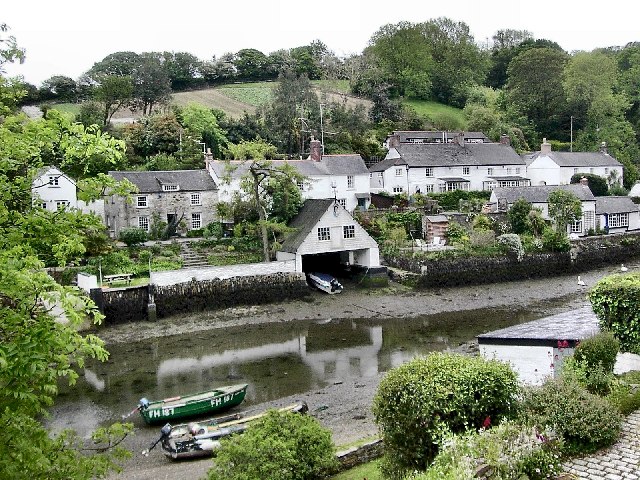
Frenchman’s Creek, a novel by Daphne du Maurier about the relationship between the English lady Dona, Lady St Columb, and a French pirate set during the reign of Charles II, came about following Daphne’s marriage, when her husband used to bring her to a tranquil corner of the Helford River, mooring up for some newly-wed canoodling.  Daphne later lived within sight of this spot, so that she was constantly reminded of those romantic times.


The story begins with a detailed description of the village of Helford and the river, partly from the viewpoint of the time when the story was set, and partly as it was during Daphne’s time there in the 1930s.  The river in Charles II’s time is described as “lonely and austere”, and the hamlet’s inhabitants as “dull-witted and uncommunicative”.  In short, no reason for anyone happening upon this spot to linger there.  Of course, at that time there would have been no pub, the present-day Shipwrights Arms being a mere 300 years old.  


File:Helford Village - geograph.org.uk - 9853.jpg
Helford Village - geograph.org.uk - 9853.  Photo by Richard Johns, via Wikimedia Commons

Du Maurier contrasts this unappealing description with how it was in her time, with “many voices to blunder in on the silence” and the coming and going of “pleasure steamers”.  Presumably these were visiting from nearby Falmouth; it is still possible to get a boat trip from Falmouth to the Helford River, also taking in Frenchman's Creek.  However, visiting yachtsmen in Daphne’s day would hesitate at the entrance to the creek, finding it disconcertingly mysterious, the only sounds the occasional plopping of a fish breaking the surface and the sound of the night-jar issuing from the bracken on the hills.

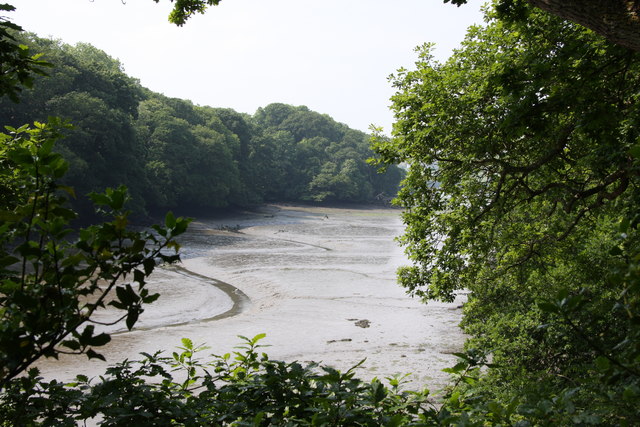
In Daphne’s day, daytrippers would head to a farmhouse kitchen which doubled up as a tea-room.  She claims in the novel that this was once Navron House, the Cornish retreat Dona escapes to when she has tired of London.  In fact, Navron House is a fiction, and the inspiration for it can be found in the Trelowarren Estate.  Fans of the book can stay on the estate, which offers a range of cottages for hire, and guests staying there can also enjoy the beautiful gardens.  What is real, however, is Frenchman’s Creek itself, a long sinuous offshoot of the Helford to the west of Helford village.  The National Trust website has a suggested walk taking in the creek.

File:Frenchman's Creek at low tide - geograph.org.uk - 1370928.jpg
Frenchman's Creek at low tide - geograph.org.uk - 1370928. Photo by Graham Loveland, via Wikimedia Commons

Helford River and its village lie between Falmouth and Lizard Point, the most southerly spot in Britain.  Lovers of gardens visiting the area are in for a treat, even if not staying at Trelowarren.  On the other side of the Helford is the National Trust garden Glendurgan, with the equally beautiful Trebah Garden next door.  From Helford, it is possible to cross to the other side by ferry and follow the South West Coastal Path along to Glendurgan.  Further afield, and accessible from Falmouth by boat, is another National Trust garden, Trelissick.

Map of the area.

Wednesday, 19 June 2019

BEAUTY IN A TIME OF COLD WAR: SUMMER OF ROCKETS/BENINGTON LORDSHIP


As was the case with its predecessor, Close To The Enemy, the latest Stephen Poliakoff TV drama, Summer Of Rockets, has come up trumps once again with its visual beauty and period touches.  Set in the Cold War period, in 1958, at a time when fears of a nuclear conflict were growing among the populace – hence the title – the focal point of the story is Russian Ă©migrĂ© Samuel Petrukhin (Toby Stephens) who invents a clever tracking device and who is reluctantly sucked into the world of espionage, necessitating repeated visits to the beautiful home of a politician and his wife, Richard and Kathleen Shaw (Linus Roache and Keeley Hawes).  Another facet of the story is the desperate search by Kathleen for her son who has disappeared.


The Shaws hold many posh get-togethers at their home, and this is where much of the action takes place in the series.  The real-life property where these scenes were filmed is the curiously named Benington Lordship, a few kilometres east of Stevenage in Hertfordshire, a private family home which opens up its gardens to the public at certain times of the year, for instance in February for the snowdrops.  The gardens were created above an ancient fortified site dating from Saxon times.  The gatehouse seen in many of the scenes is a neo-norman folly completed in 1838.  The house itself was a manor house, originally started around 1700.  The west wing was added in 1905 by the present owners’ ancestors.

File:Benington Lordship 001 (8249305273).jpg
Benington Lordship 001 (8249305273).  Photo by Ozzy Delaney, via Wikimedia Commons.

The property has been used in a number of other productions, such as the BBC Just William production and series 1 and 2 of the Channel 4 drama Humans.  

Another location frequently seen in Summer Of Rockets is the airfield where the tracking device is put to the test.  This was filmed at the former RAF base Upper Heyford in Oxfordshire, an appropriate choice, having been used as a base for US forces based in Britain during the Cold War.

File:Benington Lordship-5279415003.jpg
Benington Lordship-5279415003. Photo by Rictor Norton and David Allen, via Wikimedia Commons.

Map of Benington Lordship and surrounding area.

Thursday, 6 June 2019

STEELY STRIPPERS: THE FULL MONTY/SHEFFIELD


The 1997 British comedy film The Full Monty is a product of two vastly different phenomena that arose during the latter part of the 20th century.  The first was the decline of the steel industry, which hit the Yorkshire city of Sheffield particularly hard.  Many blame Margaret Thatcher for this, but there were multiple factors, including competition from other countries and low productivity.  Increased automation was another development, all of which put a lot of steel workers out of a job. 


The other phenomenon that appeared during this time was that of groups of male strippers, the most famous of which are The Chippendales, still going strong today.  Their performances gave hordes of leering women the chance to get their own backs for the objectification of the female body, flocking to large venues to whoop and cheer at the sight of muscly oiled male bodies, no doubt helped along by large quantities of alcohol.


The Full Monty manages to unite these two themes, telling the tale of a group of unemployed steel workers who decide to turn their fortunes around by forming a male stripper group.  Almost all of the filming took place in and around Sheffield, using glamorous locations such as an Asda supermarket, factories and a working men’s club, as well as many of the city’s streets.


File:View over the city from Bingham Park - geograph.org.uk - 16529.jpg
View over the city from Bingham Park - geograph.org.uk - 16529. Sheffield, where most of the scenes were filmed. Photo by Paul Store, via Wikimedia Commons.


The steelworks which put the men out on the streets in the film are represented by the building formerly occupied by Sanderson Special Steels in Newhall Road, Attercliffe.  The Shirebrook Colliery in the film was filmed at a Rolling Mill in the city.  The factory where Gaz’s ex-wife Mandy works is actually the now closed Eversure Textiles, which used to have premises at the Northpoint Industrial Estate.


Various locations around the city were used for scenes involving the characters’ homes: Gerald’s house in Whirlow Park Road; Gaz’s house in Oxford Street; Dave’s house in Meadowbank Road.  Manor Oaks Road is seen in the keep fit sequence, while the most poignant scene in the film, featuring Lomper’s suicide attempt, was filmed in Pickering Road.  Orgreave Way is where the ASDA supermarket was filmed, and the burger bar scene was filmed in Cambridge Street at Pepes, which is now at a different address.


The Job Centre where the lads are seen signing on was filmed at an actual Job Centre, or rather Job Centre Plus at the corner of Bailey Lane and West Street.  The school building in the scene where Gaz drops off his son is actually the Sheffield Boxing Centre in Burton Street.  The Millthorpe Working Men’s Club in the film, where the group finally get to strut their stuff, is represented by the Shiregreen Working Men’s Club at 136 Shiregreen Lane.


Out and about in the fresh air, the park where Gerald spends his days on a park bench, having kept quiet to his wife about his unemployed status, and where the lads invite Gerald to be their choreographer, is Ruskin Park in Walkley.  The park was created relatively recently on the site of a number of streets which were cleared in the early 1980s.  The city’s Crookes Cemetery is where Lomper’s mother is laid to rest.  The cemetery includes 70 graves of service personnel who served in the First and Second World Wars.  Finally, the scene in which Gaz and Dave are stranded on a sinking car was filmed by Bacon Lane Bridge in Attercliffe, on the Sheffield and Tinsley Canal, which forms the upper four miles of the Sheffield & South Yorkshire Navigation.  The canal was opened in 1819 to serve as a link between the River Don and a basin in the centre of the city.


File:Bacon Lane Bridge.jpg
Bacon Lane Bridge. Photo by Warofdreams, via Wikimedia Commons.


Visitors to Sheffield who want to find out more about the city’s industrial heritage will find what they are looking for at the Kelham Island Museum.  Metal features heavily in the works on display at the Millennium Gallery, which also contains the Ruskin Collection of works of art.  The art critic John Ruskin put the collection together with the help of his Guild for the benefit of the city’s metalworkers.

File:Kelham Island Museum, Steel Ladle.jpg
Kelham Island Museum, Steel Ladle. Photo by Mick Knapton, via Wikimedia Commons.


Map of the area.


Tuesday, 21 May 2019

INSPIRATION FOR NORTHANGER? NETLEY ABBEY, HAMPSHIRE


I have written before about the fun of trying to guess the inspiration for the properties and estates which feature in the novels of Jane Austen.  Northanger Abbey is a tricky one, but given the novel of the same name is Gothic in style, and the fact that the Austen family made multiple visits to the spooky ruins of Netley Abbey near Southampton when Jane was a girl, it does not take too much of a leap of imagination to suppose that Netley Abbey, while far from a complete and occupied property unlike the fictional Northanger Abbey, may have contributed to Jane’s interest in the Gothic, and therefore may have influenced her creation of Northanger Abbey.


Jane Austen grew up in Hampshire, and she and her sister Cassandra went to school in Southampton in 1783.  It was probably during that time, and 10 years later when she stayed with her second cousin in Southampton, that she got to know the abbey.  On one particular visit in 1807, it was not Jane but her niece Fanny who waxed lyrical about the site, describing it as a “compound of everything that is striking, ancient and majestic”, and how it “stands on an eminence, in the most romantic situation you can imagine, overgrown with ivy and concealed from your view by a high wood, down to the water’s edge” – the water in question being Southampton Water.  Work on Jane’s novel Northanger Abbey began in 1798, and it is not known to what extent she had Netley Abbey in mind when inventing the Abbey of the novel, but given the above it seems highly likely that Netley was the inspiration for Northanger.

File:Eastrange.jpg
Eastrange. Photo by Coradia1000, via Wikimedia Commons

The abbey is now managed by English Heritage, who on their website inform us that it is the most complete surviving abbey built by the Cistercian monks in Southern England.  The abbey is open year round, with slightly reduced hours during the winter months.  There are many spooky stories surrounding the abbey, which would have circulated around the time of Jane’s visits, including the story of an apparition dressed as a monk who appeared before a local undertaker who wanted to dismantle the church ruins.  The monk warned him not to, but he disregarded the warning and was rewarded with a stone falling on his head and killing him.

Map of the area.