Sunday, 29 June 2014

SNAPSHOTS OF 17TH CENTURY LONDON: SAMUEL PEPYS


Of all the many books I have read over the years, one of the most enjoyable consisted of the day-to-day ramblings of an ale-swilling, philandering but very capable civil servant.  The diary of Samuel Pepys, who rose through the ranks to occupy an important role in the Administration of the Navy, and later became an MP, although only covering a decade of his life, provides not only a fascinating insight into the life of 17th century London, but also a running commentary on some of the most significant events in the city's history, including the Black Death and the Great Fire of London.

Pepys was born on 23 February 1633 in Salisbury Court, a street leading from Fleet Street towards the River Thames.  The street was once the main carriage entrance to the medieval palace of the Bishops of Salisbury.  The area was destroyed during the Great Fire, but Salisbury Court still exists as a street, and there is a blue plaque declaring that "In a house on this site Samuel Pepys, diarist, was born".  Pepys' education included a stint at St Paul's School, still in existence and located in the riverside suburb of Barnes in south-west London.  He went on to study at Cambridge University.

Pepys started keeping his diary at the beginning of 1660, and during this first year he was appointed to the Navy Board.  During this time he lived and worked in Seething Lane, which is just to the west of Tower Hill Underground Station, where there is a bust commemorating him.  This location actually survived the Great Fire, only to succumb to a later fire in 1673.  Again, a blue plaque marks the spot.  His leisure time included visits to the 'coffee houses' which were gaining popularity at that time, and he was an avid theatre-goer.  An entry in his diary in September 1661 talks of a visit to his local theatre, Salisbury Court Theatre, to view a performance of 'Tis a Pity She's a Whore' during which, true to form, he was distracted from the proceedings on the stage by the attractive females in the audience.  

File:Bust of Samuel Pepys, Seething Lane, London EC3 - geograph.org.uk - 1077498.jpg
Bust of Samuel Pepys, Seething Lane, London EC3 - geograph.org.uk - 1077498. Photo by John Salmon, via Wikimedia Commons

His job with the Navy took Pepys to a number of locations outside London, and even abroad in his early career, when he was sent to the Netherlands to bring Charles II back from exile.  His diary entry for 30 April 1660 describes a visit to Deal on the Kent coast, which he dismisses as 'a very pitiful town'.  His negative image seems to have derived mostly from the fact that the town came up short on the ale front: “We went to Fuller’s (the famous place for ale), but they have none but what was in the vat.”  Nevertheless, the day ended with much drinking and bonhomie aboard the ships in port.   However, Pepys was much more taken with 'Maydstone' (now Maidstone), a Kent town on the River Medway, which he found "very pretty as most towns I ever saw, though not very big, and people of good fashion in it". As the running of the naval dockyards fell within Pepys' remit, he spent a lot of time in the environs of Medway and the Thames, where most of the dockyard activity was centred.  At Upnor on the Medway Pepys describes the “great disorder by multitude of servants and old decrepid men, which must be remedied”.  Another regular haunt was Deptford on the Thames, where the first of the Royal Dockyards was built.  His visit to Deptford overnight from 11-12 January 1660 was enlivened by "a rising of Fanatiques" in response to which "seamen of all the ships present repair to us, and there we armed every one with a handspike, with which they were as fierce as could be".  Pepys made many visits to Greenwich, another Thames location with a strong naval pedigree.  The Navy Office was moved to Greenwich in August 1665, and Pepys stayed in lodgings nearby for a while.
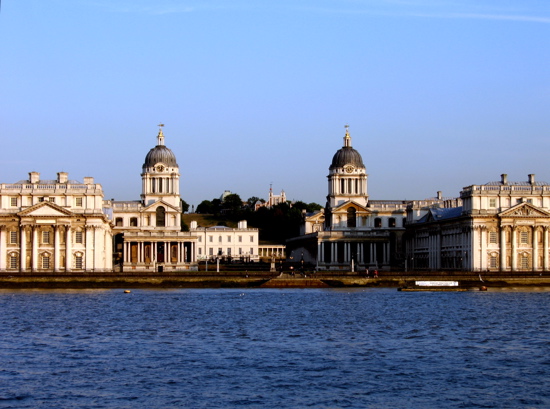
File:2005-06-27 - United Kingdom - England - London - Greenwich.jpg
2005-06-27 - United Kingdom - England - London - Greenwich - CC-BY 4887324365. Photo by CGP Grey, via Wikimedia Commons

After the period covered by the diary, Pepys went on to have an eventful life, including being imprisoned for Jacobitism in 1690.  In 1701 he moved to a house in Clapham, and he died there two years later.  However, he was buried back in London, alongside his wife and one of his brothers, at St Olave's Church in Hart Street in the City of London, which he refers to in the diary as "our own church".  As for the diary itself, the original manuscript survives to this day, and is kept in the Pepys Library at his Cambridge college, Magdalene College.

File:PepysLibraryCambridge.jpg
PepysLibraryCambridge. Photo by Andrew Dunn, via Wikimedia Commons

Wednesday, 4 June 2014

NORDIC NOIR MEETS CYMRU: HINTERLAND


Over the last few years a new genre of detective TV drama has crept onto our screens: the so-called 'Nordic noir' or 'scandi-noir', characterised by grisly murders set against moody backdrops, with characters speaking impenetrable nordic languages necessitating the addition of subtitles.  Earlier this year, however, the genre reached UK shores in the form of the excellent Hinterland, shot in the bleak landscapes around the mid-Wales seaside town of Aberystwyth.  There were even occasional subtitles, as some of the characters lapsed into Welsh.  In fact, the series was shot twice, once in English and once in Welsh, as it was to be shown on both BBC 4 and the Welsh channel S4C (with the name Y Gwyll).  The 'scandi-noir' credentials of the series are borne out by the fact that the Danish TV channel DR, which was responsible for the daddy of all such series, The Killing, decided to buy Hinterland for Danish consumption. 

Aside from the excellent actors, the other star of the series is the bleak but beautiful landscape which lies inland from Cardigan Bay.  The opening scene features the star of the show DCI Mathias (Richard Harrington) jogging along the clifftops to the static caravan where he is living following a broken marriage.  The location of the caravan, carefully chosen by the location scouts, is by the Blaenplwyf transmitting station south of Aberystwyth.  The focal point for the first murder of the series is a beauty spot 12 miles inland from the town called Devil's Bridge Falls.  The falls are reached via an entrance gate (admission charge) and a series of steps, and there are two walks to choose from taking in the surrounding woodlands.  The name of the falls stems from a legend involving the Devil, an old lady, a dog and an errant cow - the full story can be found on the Falls' website.  


File:Devil's Bridge - geograph.org.uk - 196947.jpg
Devil's Bridge - geograph.org.uk - 196947. Photo by Richard Croft, via Wikimedia Commons.


The Police Station where the detectives are based in the series is in Aberystwyth, with the County Hall acting as the exterior, and a disused building on the University campus serving as Mathias' office.  There are a number of shots of the seafront including glimpses of the 1920s shelter on the Promenade.  Sadly, the shelter was damaged during the vicious storms of last winter (the filming was done prior to all the mayhem), however it has been reported that the shelter will be rebuilt.  Aberystwyth is the liveliest seaside town along this coast due to its student population.  The pier is popular with bird enthusiasts, being a hotspot for starling 'murmurations' at certain times of the year.  As well as the University, the town houses the National Library of Wales.  Devil's Bridge Falls can be reached from Aberystwyth via the Vale of Rheidol Railway, a narrow-gauge heritage line.  To get a lovely view over the town, take the Cliff Railway up Constitution Hill.

File:Aberystwyth seafront - geograph.org.uk - 243595.jpg

Aberystwyth seafront - geograph.org.uk - 243595. Photo by David Stowell, via Wikimedia Commons.


As well as Aberystwyth, the seaside community of Borth just up the coast features in the series, most notably in the fourth, and final, episode in which the marshes just inland provide a suitably empty and barren backdrop for the discovery of a body.  Borth railway station also gets a good airing, with its creepy station master keeping a constant eye on the goings on out in the marshes, and ending up on the suspect list.  In real life the railway station is an unmanned halt along the Cambrian Line.  Borth's long sand and pebble beach is backed by a sea wall and a straggle of houses.  The main attraction for visitors apart from the beach is the Animalarium, with creatures including lemurs and wallabies.

For those who enjoyed watching Hinterland and are missing it already, fear not.  Word has it that filming of a second series is due to start in September.     

Map of Aberystwyth.


Tuesday, 6 May 2014

LONDON'S GRITTY SIDE: THE LONG GOOD FRIDAY


I remember watching The Long Good Friday for the first time very well.  For one thing, it was the first time my husband and I sat down to watch a film together in the early days of our relationship.  The other thing that makes it stand out in my memory is the fiery portrayal of the film's main character, the gangster Harold Shand, by one of Britain's best-loved actors, Bob Hoskins, who sadly died of pneumonia last week aged 71.  In the film, which dates from the early days of Thatcherism, Shand (whose girlfriend is played by a youthful Helen Mirren) has a plan to develop the London Docklands into a future Olympics venue (long before this became a reality) with the backing of American Mafia money, but his plans rapidly descend into chaos over an Easter weekend with a series of murders and explosions which, it later transpires, are the work of the IRA: one of Shand's associates got on the wrong side of them in a previous event resulting in several IRA deaths.

As for the film's locations, it is fascinating when watching the film now to see certain parts of London which have since changed beyond recognition.  When Shand tours the site of his proposed development in the Canary Wharf area, we see the location of what was to become One Canada Square, a skyscraper completed in 1991.  The building, designed by architect Cesar Pelli, was the tallest building in the UK from 1990 to 2010, and is primarily used for retail and offices.  Another scene in the film was shot at the Harringay Stadium, best known for greyhound racing and motorcycle speedway.  The stadium closed in 1987 and - a sign of our retail-obsessed times - has been turned into a superstore.  At one point in the film Shand has a meeting at the King George V Dock in the Royal Docks.  This has also completely changed use, and is now the site of London City Airport.  

File:Masters of the Universe - geograph.org.uk - 1495606.jpg
Masters of the Universe - geograph.org.uk - 1495606. Photo by Mike Quinn, via Wikimedia Commons.

No film shot in London would be complete without a sprinkling of pubs, real or purpose-built.  The Governor General pub depicted in the film was the actual name of this pub in Downham, south-east London, at the time of filming, but the pub is now gone, replaced by a Q8 petrol station.  The pub in the film which is supposedly Fagan's in Belfast, is actually The Salisbury Hotel in Green Lanes, Harringay.  As for the Lion and Unicorn pub, this is a complete fabrication made for the film in Wapping - just as well because it is the scene of one of the explosions.  The film-makers must have made a good  job of it, because allegedly people kept knocking on the door during filming to find out when the pub was going to open.  Another explosion occurs when Shand's Rolls Royce is blown up in a churchyard, killing the chauffeur.  This scene was filmed at St George in the East, a striking church built in the early 18th century and located in Stepney, just to the north of St Katharine Docks.  This Anglican Church was the scene of an earlier real-life explosion when it was bombed during the Blitz, but it was rebuilt and is still a functioning church.  The interior church scenes were filmed in St Patrick's Church, a Roman Catholic church in Wapping.  One of London's most famous hotels, The Savoy, also puts in an appearance towards the end, when Shand has a meeting with his mafia buddies.

File:St George in the East 01.jpg
St George in the East 01. Photo by Steve Cadman, via Wikimedia Commons.

So, if you want to have a nostalgic look at the London of the end of the 70s/early 80s, why not pay your respects to the late Bob Hoskins by watching, or rewatching, what many consider to have been his best cinematic performance.

Sunday, 13 April 2014

A GOLDEN WONDERLAND IN THE LAKE DISTRICT: WORDSWORTH


The Lake District is a joy to visit at any time of year, but at this time of year it is particularly beguiling.  Quite apart from the ever-present lakes and mountains which make this part of England so special, the visitor is confronted with the charming sight of lambs frolicking in the meadows, while the whole scene is embellished with a generous coating of yellow in the form of the vast numbers of daffodils which spring up at every roadside and lake shore, and in every piece of woodland.  The English poet Wordsworth was so entranced by this scene that it formed the basis for what was probably his most famous poem, "I wandered lonely as a cloud".  In the poem Wordsworth describes "A host of golden daffodils; Beside the lake, beneath the trees; Fluttering and dancing in the breeze."  The poem continues in this vein, recalling how the daffodils "stretched in never-ending line" and were "tossing their heads in sprightly dance".  

William Wordsworth was well qualified to describe the beauties of the Lake District, since he spent a large portion of his life there.  He was born in the gracious riverside town of Cockermouth just to the north-west of the Lake District, where he spent his childhood in a house on Main Street, now open to the public as Wordsworth House and Garden, owned by the National Trust.  He did a bit of travelling, spending some time in Germany with his sister Dorothy and fellow poet Coleridge, but he found himself pining for the Lakes and eventually he moved back there, taking up residence with Dorothy in Dove Cottage in Grasmere, formerly an inn called the 'Dove and Olive Bough'.  They were later joined by William's childhood friend Mary, who he married in 1802, and it was during the early years of his married life that "I Wandered Lonely As A Cloud", also known as "Daffodils", was published as part of a collection of poems.  There was another poet called Robert Southey living nearby and Wordsworth, Southey and Coleridge came to be known as the 'Lake Poets'.  

File:Dove Cottage - Wordsworths Home (3721733134).jpg
Dove Cottage - Wordsworth's Home (3721733134).  Photo by Greg Willis, via Wikimedia Commons.

Grasmere is the name of both the village where Wordsworth lived and the lake on which it is situated, right in the heart of the Lake District.  There are a range of restaurants, inns and shops in the village, while Wordsworth fans can visit Dove Cottage, run by The Wordsworth Trust.  Displays on view include the 'Grasmere Journal' kept by Dorothy.  The garden, which is also open to visitors, has been restored to the half wild state that the Wordsworths created from local plants and materials.  On  his death in 1850 William Wordsworth was buried in the graveyard of St Oswald's Church in Grasmere, where the grave is still on view.  Visitors to this beautiful corner of the Lake District at this time of year will have no trouble imagining where the poet got his inspiration from.

File:Grasmere - geograph.org.uk - 7738.jpg
Grasmere - geograph.org.uk - 7738. Photo by Val Vannet, via Wikimedia Commons.


Map of Cockermouth.

Map of Grasmere.


Friday, 7 March 2014

THE REAL WALMINGTON-ON-SEA: THETFORD, NORFOLK


We often hear people say that they don't make comedy like they used to, and it is hard to disagree with that sentiment faced with the eternally hilarious Dad's Army, a hugely successful TV sitcom which was broadcast over a period of 9 years from 1968 to 1977.  The series followed the often disastrous adventures of a mostly geriatric Home Guard platoon during World War II in the fictional seaside town of Walmington-On-Sea, and it was known for its catchphrases, such as Corporal Jones' "They don't like it up 'em".  What many may not realise is that, while there were some coastal scenes, the main outside action around the town was filmed in the distinctly inland town of Thetford in Norfolk. 

While Thetford may seem a strange choice of location given its distance from the Norfolk coast, there is no denying that this part of Britain played a key role during the War.  For example, seven miles north of Thetford is an area which came to be known as STANTA (Stanford Training Area).  Several villages had to be evacuated so that the land could be given over to the training activities.  The makers of Dad's Army used this part of Norfolk for many of the scenes, including the sequence at the end of each episode with the platoon advancing across the countryside in camouflage. Meanwhile, back in Thetford, several of the town's major buildings were used in the filming.  The very first scene of the first episode, 'Man of the Hour', was filmed in what is now the restaurant of The Bell Hotel, now a part of the Old English Inns chain.  The Palace Cinema, opened in 1913, was used in 'The Big Parade' and 'A Soldier's Farewell'.  The cinema was also used by the crew to view the rushes of the filming each week.  Like many such cinemas the Palace, which ceased to operate as a cinema in 1985, was turned into a Bingo Hall.  In the episode titled 'Time On My Hands', a German pilot is seen dangling from a clock tower.  The tower in question was that of Thetford's Guildhall, which was used as Walmington-On-Sea's Town Hall in the series.  The typically East Anglian row of flint cottages called Nether Row featured in four of the episodes: 'Man Hunt', 'The Armoured Might of Corporal Jones', 'The Big Parade' and 'Time On My Hands'.  

File:Thetford Guildhall - geograph.org.uk - 223473.jpg
Thetford Guildhall - geograph.org.uk - 223473. Photo by Stephen MacKay, via Wikimedia Commons.

Fans of the series wanting to seek out the locations used in Thetford will not be disappointed, as in 2004 the town instigated a walking tour taking in the Dad's Army sites.  Added to which there is a museum dedicated to the series in the Guildhall.  Sadly, most of the cast of the series are now dead, but Captain Mainwaring (played by Arthur Lowe) lives on in the form of a statue unveiled in Thetford in 2010 which depicts the bumptious uniformed Mainwaring sitting on a bench with his baton across his knees.  However, there is more to this market town than Dad's Army.  The town has a long history dating back to the Iron Age, and in 1979 a hoard of Romano-British metalwork was found, which came to be known as the 'Thetford treasure', although to see the hoard you will need to go to the British Museum, where they are currently on display.  Sites of interest in the town include the Ancient House Museum of Thetford Life and the ruined Thetford Priory, run by English Heritage.  For some wide open spaces and greenery, head to Thetford Forest to the north-west of the town, a mixture of trees and heathland with walking and cycling trails and play areas for children.
  

File:Mainwaring Statue.jpg
Mainwaring Statue. Photo by PentneySam, via Wikimedia Commons.

Map of the area.


Wednesday, 12 February 2014

LAMORNA, BUT NOT AS WE KNOW IT: SUMMER IN FEBRUARY


I was born in West Cornwall, just a few miles from the pretty little cove of Lamorna which forms the centrepiece of the story told in the film Summer In February, based on a true story about a colony of artists known as the Lamorna Group and the love triangle which develops between one of the artists, Sir Alfred Munnings (Dominic Cooper) and his friend Gilbert Evans (Dan Stevens, who met an untimely end in Downton Abbey) who both fall for the visiting beauty Florence Carter-Wood (Emily Browning).  I was therefore looking forward to settling down to watch the film, hoping to catch a glimpse of some of my favourite childhood haunts.  In fact, Lamorna itself features surprisingly little in the film, although there are a number of beautiful Cornish locations for location-spotters to feast their eyes on. 

The film's most gorgeous beach scenes were filmed at Holywell Bay, a short distance from Newquay on the north coast - perfect for horseriding as demonstrated by the film's characters - and at Porthcurno, famed for its unique Minack Theatre, which is actually quite close to Lamorna.   Prussia Cove, further round Mounts Bay beyond St Michael's Mount, was used for most of the Lamorna scenes in the film, as the crew deemed it more practical for filming purposes.  Prussia Cove, which actually includes four tiny coves set among an Area of Outstanding Natural Beauty, is a private estate which includes holiday and event accommodation.  The notorious smuggler John Carter operated out of this stretch of coast in the late 1700s, hence his nickname, the King of Prussia.  Trereife House in my home town, Penzance, was another filming location; this elegant country house used to offer holiday accommodation, but is no longer open to visitors.  The woods featured in the film looked suspiciously un-Cornish to me, and I was right: it turns out the woodland walk scene was filmed in Hertfordshire.

File:Holywell Bay.jpg
Holywell Bay. Photo by Nilfanion, via Wikimedia Commons.

As for Lamorna itself, the village and its cove lie at the end of a lush green valley.  There is a tiny harbour, which has sadly fallen victim to the violent storms which are still battering Britain as I type: the harbour wall was literally broken in two by the force of the waves.  Art fans who want to immerse themselves fully in the Cornish landscape so beloved of Munnings and his friends can rent holiday accommodation adjoining the converted barn used as a studio by the artist.  Alternatively, The Cove Hotel was once home to Gilbert, and later to Florence and Alfred after they were married.  While in Lamorna a drink in the village pub, The Lamorna Wink, is a must - one of the film's early scenes features a boozy evening in The Wink.  There are lovely cliff-top walks from Lamorna, towards Porthcurno in one direction and towards Mousehole in the other - one of the film's scenes features a short clip of the latter.  Near Lamorna is a stone circle called the Merry Maidens, where Florence and Gilbert used to meet.  Legend has it that a group of maidens were turned to stone for dancing on a Sunday; I vividly remember being told this as a small child, to my utter terror.  Finally, Lamorna is only a few miles away from some of Cornwall's most artistic towns and villages, including Newlyn, Mousehole and last, but by no means least, St Ives.  
File:Lamorna Cove - geograph.org.uk - 847500.jpg
Lamorna Cove - geograph.org.uk - 847500. Photo by Tony Atkin, via Wikimedia Commons.


Map of Lamorna.


Friday, 24 January 2014

THE GAFF ON THE TAF: DYLAN THOMAS AND HIS LAUGHARNE HIDEAWAY


I first visited the estuary town of Laugharne - pronounced Larne - a few years ago on the way home from a weekend in Tenby with my husband.  I must confess I had never heard of it before, but the landlady of our bed and breakfast recommended it, so we decided to look in on it.  After wandering around the town we decided to go for a walk along the path by the west bank of the estuary of the River Taf, on which the town is situated, and after a short distance we came across a sweet little building, barely more than a hut.  Peering through the window, it became apparent that what we were looking at was the 'Writing Shed' used by Dylan Thomas during his time living in Laugharne.  Thomas and his family spent the last four years of his tragically short life living in the Boat House on the shore of the estuary, and the shed was perched just above it.  It was a lovely Sunday morning when we visited, and as we gazed out at the stunning views of the estuary and of the majestic Gower Peninsula away in the distance, it was easy to imagine what a source of inspiration this spot must have been for the most famous Welsh poet.
The Boathouse

The first poem written by Dylan Thomas in his Writing Shed was 'Over St John's Hill', which describes the view - "Crystal harbour vale//Where the sea cobbles sail", "wharves of water where the walls dance and the white cranes stilt" - and the wildlife - "the hawk on fire hangs still" and "the elegiac fisherbird stabs and paddles".  Other works borne from Thomas' time in the shed include 'Do Not Go Gentle into that Good Night' about his dying father and 'Poem on his Birthday'.  The characters in 'Under Milkwood' are believed to have been inspired by the people of Laugharne, although the location is thought to be based on New Quay in Cardigan Bay.  


The Taf Estuary

For visitors who want to follow a 'Dylan trail' there are a number of sites around Laugharne with connections to the poet.  Brown's Hotel was where he would retreat to after a bout of poetry-writing in order to indulge his other great passion in life: drinking.  The sign outside the hotel shows an image of the poet.  There are two former homes which were occupied by the poet and his family before they settled in the Boat House: Eros, a fisherman's cottage on Gosport Street and Sea View behind the castle.  The castle, dating from Norman times and now a ruin, was a favourite haunt of Thomas when seeking peace and solitude.  The hillside cemetery of St Martin's Church harbours the graves of both Dylan and his beloved wife Caitlin.  Nature lovers will find plenty of birdlife down at the estuary, with egrets, lapwings, herons, oystercatchers, seals and even the occasional otter making an appearance.

File:Browns hotel.jpg
Browns Hotel. Photo by Tony in Devon, via Wikimedia Commons
The Boat House is open to visitors from May to October, and offers memorabilia devoted to Thomas as well as a tea room and art gallery.

This year marks the centenary of the birth of Dylan Thomas, who was born on 27 October 1914.  For the centenary a pop-up replica of the Writing Shed will be touring throughout Wales.

Map of the area.