Thursday, 28 September 2017

BY ROYAL APPOINTMENT: OSBORNE HOUSE/VICTORIA AND ABDUL


In 1876 Queen Victoria became Empress of India, some years after the British protectorates and possessions in India were incorporated into the British Empire. This new role led to a growing fascination with the Indian Subcontinent, and eleven years later Victoria decided to bring two Indian nationals to Britain to act as attendants to the Queen.  One of them, Abdul Karim, developed a close platonic friendship with Her Majesty, which led to some considerable friction among members of the Royal Household.  This story forms the basis of the recently released film Victoria and Abdul starring Dame Judi Dench as Queen Victoria.

Abdul spent time at a number of the royal properties, but one which features heavily in the film is Osborne House, Queen Victoria’s beloved retreat on the Isle of Wight.  This was an exciting time for the English Heritage staff at the property, it being the first time a feature film had made use of the sumptuous interiors, which include many Indian influences.  For example, the Durbar Room, with a ceiling designed by Lockwood Kipling, father of the author Rudyard Kipling.  There is a portrait of Abdul Karim hanging in the Durbar Room and it is redolent with Indian touches such as the beautiful peacock fireplace.  The Drawing Room also makes an appearance, with its yellow satin curtains and full length mirrors, as does the Grand Corridor with its classical statues and busts and decorative tiled floor.

The Durbar Room
As well as the interiors, the grounds of the house are also seen in the film.  The exterior architecture is Italianate in style.  When I visited last year I had recently been to Lake Maggiore and the exterior of Osborne House took me right back there.  The grounds range from a more formal style immediately outside the house to the landscaped parkland in which red squirrels can sometimes be found – we thought we saw one belting along, but it was moving too fast to be sure it was a red.  There is a lovely walk down to the private beach with views over the Solent, where the Queen’s personal bathing machine can still be found, as well as a cafe.  Probably the most surprising thing encountered by visitors to the property is the Swiss Cottage, an authentic wooden chalet where the Queen’s children enjoyed hours of fun and where they were taught about ‘normal’ life activities such as growing and cooking vegetables.


The Italianate exterior

As mentioned before, Osborne House, which is a short distance to the south-east of East Cowes, is run by English Heritage and is open all year round except for Christmas.  Allow plenty of time for your visit as there is lots to see.


Wednesday, 13 September 2017

J. M. BARRIE'S NEVERLAND: KIRRIEMUIR AND DUMFRIES


J. M. Barrie’s creation Peter Pan is one of the most enduring fictional characters in British literature, best known for his eternal youth.  Neverland, the fictional land occupied by Peter and his pals, is the other creation of Barrie’s which has caught the public imagination, with its landmarks including Neverwood, Neverpeak Mountain, the Maze of Regrets and Pixie Hollow.

So what is the origin of this fabled land?  J. M. Barrie was born in 1860 in Kirriemuir, in Angus, just under 20 miles north of Dundee, and spent his early years sharing the family home, a typical weaver's house, with his large family.  The countryside around Kirriemuir is enhanced by views of the snow-capped Cairngorm Mountains, which may have contributed to Barrie’s imaginings of Neverland. However, it is a property on the other side of Scotland at Dumfries that is credited as being the birthplace of Peter Pan.

File:Barrie's Birthplace, Kirriemuir - geograph.org.uk - 105807.jpg
Barrie's birthplace, Kirriemuir - geograph.org.uk - 105807.  Photo by Richard Slessor, via Wikimedia Commons

In 1873 Barrie moved from Kirriemuir to Dumfries, where he stayed with his older brother and attended the Dumfries Academy.  While at the Academy he began to hone his writing skills, writing for the school magazine.  From the ages of 13 to 18 Barrie frequented the Georgian house known as Moat Brae, built in the 1820s, where he played pirate games with his friends in the grounds surrounding the property, described by him as the ‘enchanted land’.  It was these exploits that were to provide the inspiration for the Peter Pan story.

File:Moat Brae - geograph.org.uk - 498825.jpg
Moat Brae - geograph.org.uk - 498825. Photo by Darrin Antrobus, via Wikimedia Commons

Today, the Peter Pan Moat Brae Trust, with Joanna Lumley as its patron, is trying to raise money to create a National Centre for Children’s Literature and Storytelling, complete with an adventure garden to give the kids a chance to recreate Barrie’s childhood activities.   Meanwhile, back in Kirriemuir, the National Trust for Scotland has taken ownership of  Barrie’s birthplace, located at 4 Brechin Road.  The house is stuffed full of exhibits and memorabilia pertaining to the author.  Fans of Barrie who want to visit the grave where he was buried upon his death in 1937 will find it in Kirriemuir Cemetery.

File:J. M. Barrie's Grave - geograph.org.uk - 393060.jpg
J. M. Barrie's Grave - geograph.org.uk - 393060.  Photo by Darrin Antrobus, via Wikimedia Commons

Map of Kirriemuir

Map of Dumfries.


Tuesday, 29 August 2017

TREASURE HUNTING IN SUFFOLK: DETECTORISTS


Detectorists is a gentle comedy with an unusual theme: metal detecting.  The series follows the exploits of a small group of metal-detecting enthusiasts, including Andy (Mackenzie Crook) and Lance (Toby Jones).  Much of their time is spent scouring the gentle green fields around their neighbourhood, dreaming of the discovery of the next “Staffordshire Hoard”, but more often than not their finds are confined to metal ring-pulls or cheap badges.

The green fields in question are located in Suffolk, chiefly in the area in and around Framlingham – meant to be the fictional town of Daneby in Essex.  The Scout Hall where the detectorists meet up is in Framlingham, better known as St Michaels Rooms.  The most important landmark in the town is the castle, and near the entrance to the castle is the Castle Inn – this appears in the series as the Two Brewers pub, although the interior pub scenes were filmed in The Crown in Great Glemham, a few miles away.   Other pub scenes were filmed in the coastal village of Orford, at the Kings Head.  

File:Pastel street scene, Framlingham, Suffolk. - geograph.org.uk - 1475942.jpg
Pastel street scene, Framlingham, Suffolk - geograph.org.uk - 1475942. Photo by nick macneill, via Wikimedia Commons

Back in Framlingham, the distinctive red brick facade of Framlingham College features in series two, doubling as a university.  During series two a round-tower church, one of 38 in Suffolk, becomes integral to the storyline.  The church is Aldham St Mary, in the village of Aldham, eight miles west of Ipswich.  Apparently, the landowner there allowed Mackenzie Crook to do some detecting in his spare time while filming was taking place, and he found some interesting items including some musket balls.

File:St Mary Aldham - geograph.org.uk - 985095.jpg
St Mary Aldham - geograph.org.uk - 985095. Photo by Keith Evans, via Wikimedia Commons


Framlingham is about 12 miles to the north-east of Ipswich, and its main attraction, the castle, is at the north-east edge of town.  Music fans may be interested to know that Ed Sheeran grew up in Framlingham, and his song “Castle on the Hill” was inspired by Framlingham Castle.  Orford is on the coast to the south of Aldeburgh, and it also has a castle, as well as the rather eerie Orford Ness with its wartime relics, such as a model atomic bombing range.  The site is also a National Nature Reserve run by the National Trust.


Tuesday, 1 August 2017

BOURNE TO FIGHT: GLADIATOR HITS SURREY


During the spread of the Roman Empire large swathes of Europe came under the rule of these powerful conquerors.  Traditionally associated with Southern Europe and the Mediterranean, it is easy to forget that the Empire also spread to more northern regions, from our own Britannia in the west to Eastern Europe and the shores of the Baltic.  Germania was the name given to the part of the Empire mostly inhabited by Germanic peoples, and it extended from the Danube to the Baltic and from the Rhine to the Vistula. 

Gladiator, directed by Ridley Scott,  is one of my favourite films, mainly for the superb acting by Russell Crowe as Maximus and by Joaquin Phoenix as Commodus (he was robbed at the Oscars in my opinion), not to mention the late, lamented hellraisers Richard Harris and Oliver Reed, who actually died during filming.  Some amazing computer and filming wizardry brought Reed back to life for the scenes involving him which were yet to be filmed. 

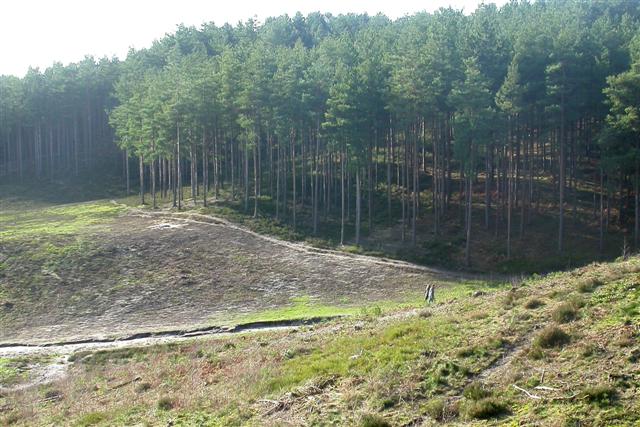
However, the film is also notable for its camerawork, making use of an array of stunning locations.  The stirring opening scene of Gladiator, depicting a battle in the forests of Germania set to the warlike music of Hanz Zimmer, was actually filmed in Surrey, in an area south of Farnham known as Bourne Wood, an area of mainly coniferous woodland.  The woods here have been purposely designated as a filming area, the Forestry Commission allowing them to be used for this purpose for up to 8 months a year, subject to certain restrictions such as the use of helicopters.  Other films making use of the woods include Harry Potter and the Half-Blood Prince, Harry Potter and the Deathly Hallows, Ridley Scott’s Robin Hood and War Horse.  On the small screen the woods featured in the miniseries Band of Brothers, and they were used as jungle for It Ain’t Half Hot Mum.  They also appear in a number of adverts and in the video for Coldplay’s The Scientist.


File:Bourne Wood - geograph.org.uk - 317184.jpg
Bourne Wood - geograph.org.uk - 317184. Photo by Ben Gamble, via Wikimedia Commons