Friday, 14 February 2020

A BEGINNING AND AN END TO A LIFE WELL LIVED: JANE AUSTEN/HAMPSHIRE


There are many places around the country with Jane Austen associations, whether from mentions in her books (for example Lyme Regis in Persuasion) or places she has visited and which have formed inspiration for her work (such as Netley Abbey, believed to be the inspiration for Northanger Abbey).  However, her life began and ended in two tranquil locations in Hampshire less than 20 miles apart.


Jane’s life began in 1775 in the Rectory in Steventon, a tiny village to the north of the A303 near Basingstoke, where she grew up with her siblings until the family moved to Bath.  It was here that she drafted two of her most famous stories: Pride and Prejudice and Sense and Sensibility.  Unfortunately, there is not much for Austen fans to see in the village now, the Rectory having been demolished soon after the move to Bath.  The site was excavated by volunteers in 2011, and the fragments of objects found during the dig provided an insight into the family’s day-to-day life.  All that remains now is an old lime tree planted by Jane’s eldest brother James.


Towards the end of her life, four years after her father’s death in 1805, Jane’s brother Edward moved her, her sisters and mother to a red brick cottage in Chawton, near the A31 and to the south-west of Alton, Hampshire.   Her life there was very quiet and family-oriented, certainly by comparison to the time she spent in Bath.  Her quiet existence there enabled her to concentrate on her writing, and it was from here that her novels became published works, including the earlier drafted Pride and Prejudice.  It is this property which is the one most visited by Austen fans, having been turned into the Jane Austen’s House Museum.


File:Chawton-Austen-House.jpg
Chawton-Austen-House. Photo by Jahs, via Wikimedia Commons.


Although Jane’s last permanent address was the cottage in Chawton, strictly speaking she ended her life in Winchester.  While in Chawton her health began to decline, with her deterioration becoming inescapable during 1816.  In January 1817 she began writing a novel initially titled ‘Two Brothers’, but later retitled ‘Sanditon’.  She only managed to complete eleven chapters before putting her pen down for the last time.  In May of that year her sister Cassandra and brother Henry brought her to Winchester for treatment, but sadly this was to no avail, and she died in July at the age of 41.  Jane died in a mustard-coloured house at 8 College Street, and she was buried at Winchester Cathedral.  The house bears a plaque recording her time there.  Her cause of death has widely been reported as Addison’s disease, although some versions cite Hodgkin’s lymphoma as the condition which finished her off.

File:Jane Austen's House, Winchester - geograph.org.uk - 1322610.jpg
Jane Austen's House, Winchester - geograph.org.uk - 1322610. Photo by Stephen McKay, via Wikimedia Commons.

Thursday, 16 January 2020

THE SHOW THAT PUT BARRY ON THE MAP: GAVIN AND STACEY


Until the mid-noughties, the Welsh town of Barry, including the resort area of Barry Island, was one of the more obscure coastal towns on the British coast, with a reputation for being a bit down-at-heel, a reputation confirmed by my husband’s accounts of childhood trips to the area.  However, all this has changed since 2007, when the engaging sitcom Gavin and Stacey hit our screens.  Barry has been used as the main backdrop of this story of a long-distance romance between Gavin from Essex (Matthew Horne) and Stacey from South Wales (Joanna Page), drawing in their friends Smithy (James Corden), Nessa (Ruth Jones) and assorted family members.

File:Barry Island (19246735281).jpg
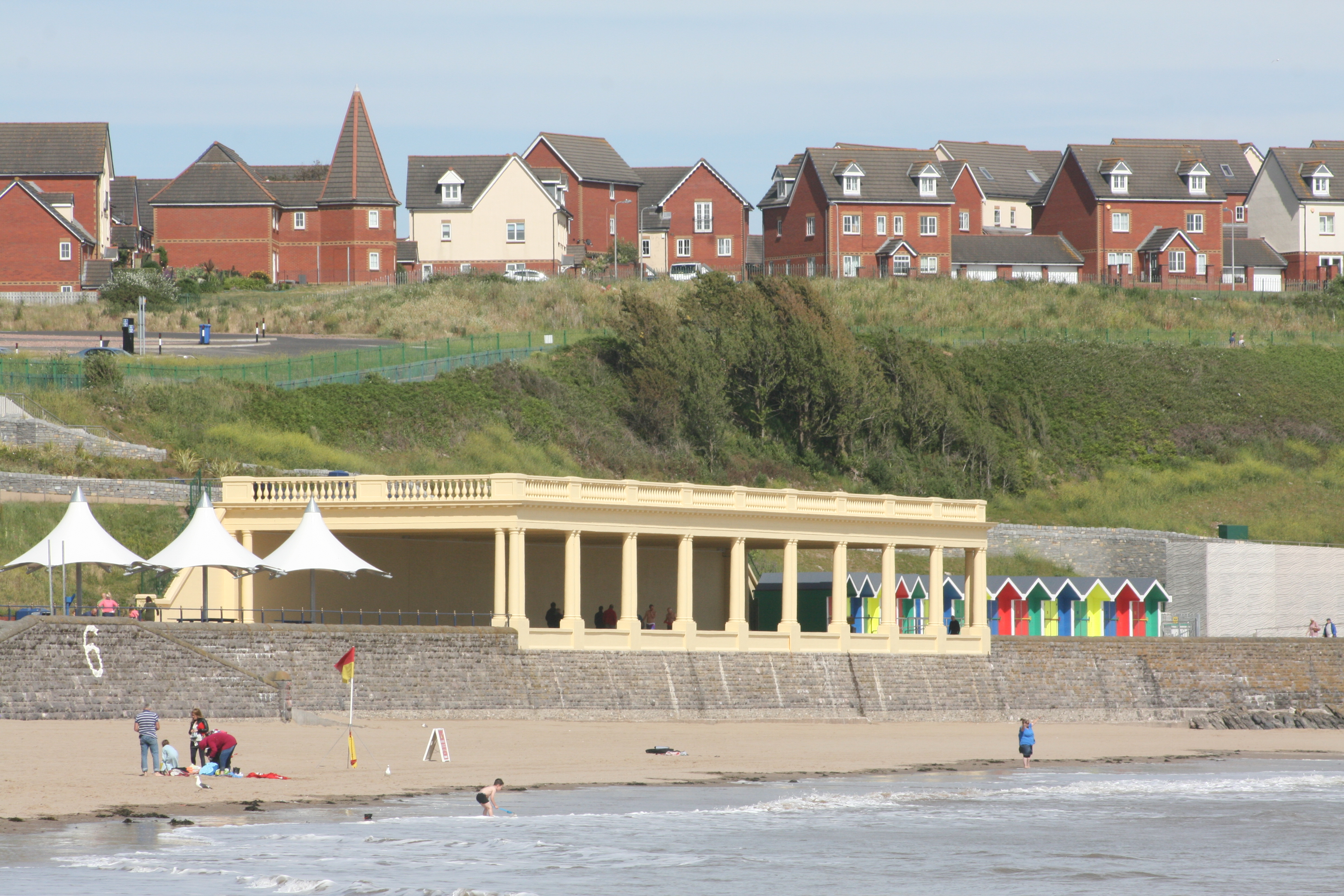
Barry Island (19246735281). Photo by Jeremy Segrott, via Wikimedia Commons
Undoubtedly the main draw of Barry Island is its golden beaches, fringing the attractively curved Whitmore Bay, and this is where the beach scenes of the series were filmed.  In series 3, Stacey is seen working in a beachside cafe: this is Marco’s Cafe towards the western end of the beach.  A few steps from the cafe is the Island Leisure Amusement Centre, which is Nessa’s place of work.  The beach wall by Boofy’s Fish and Chips Cafe, was used for a classic shot of the four friends together.  

File:Barry Island promenade (4674).jpg
Barry Island promenade (4674). Photo by Nilfanion, via Wikimedia Commons


In one episode, Nessa has a change of career when she tries her hand at being a human statue.  The scene was shot outside Barry’s Library and Town Hall in King’s Square.  Staying in Barry, a couple of local hotels feature in the filming: the Tadcross Hotel at 271 Holton Road is the scene of a christening party and the Colcot Arms in Colcot Road is where Smithy’s quiz night is held.  However, the hotel where Nessa reveals she is pregnant is not in Barry, but is the Glendale Hotel in Penarth, just outside Cardiff.  Penarth is also the location of Gwen’s birthday barn dance, which takes place in All Saints Church Hall, Victoria Road.  

File:All Saints Church, Penarth - geograph.org.uk - 5053179.jpg
All Saints Church, Penarth geograph.org.uk - 5053179. Photo by Jaggery, via Wikimedia  Commons
As for the houses occupied by the merry band of friends and relatives, several of the characters live in Trinity Street in Barry.  The real-life residents have had to put up with droves of fans turning up, even coach parties in some cases.  Another house in Dinas Powys near Penarth doubles as Gavin’s house in Billericay and has also been a magnet for fans, apparently to the dismay of the owner.  

Map of Barry  

Monday, 23 December 2019

SHERE CHRISTMAS ROMANCE: THE HOLIDAY


Shere is the sort of village that automatically comes to mind when people think of rural England.  So it is no surprise that it has been used in films on several occasions.  As well as Bridget Jones, The Edge of Reason and Four Weddings and a Funeral, Shere was one of several picturesque locations featured in the Christmas romantic comedy The Holiday, in which two women, one American (Cameron Diaz  as Amanda) and one British (Kate Winslet as Iris) swap houses for the Christmas period to get over their respective broken hearts and find new love.


Shere lies in the Vale of Holmesdale between Guildford and Dorking in Surrey at the foot of the North Downs, and consists of an assortment of pretty cottages, two pubs, a church, a tearoom and a small museum.  A stream running through it with ducks completes the idyllic picture.  The cottage Iris lives in was built specially for the film on a hillside overlooking Shere, but it was inspired by a real one much further away.  Of course, no Christmas romantic comedy would be complete without a covering of snow, so the village is seen in the film with its white winter coat on (disregarding the fact that southern England very rarely gets snow over Christmas).

File:Church Hill, Shere - geograph.org.uk - 535227.jpg
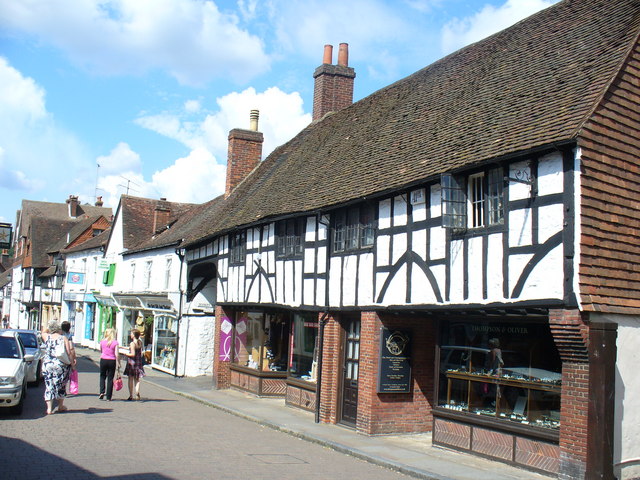
Church Hill, Shere - geograph.org.uk - 535227. Photo by Colin Smith, via Wikimedia Commons


As well as Shere, the nearby town of Godalming is seen in some of the village scenes plus the railway station scene.  Church Street is seen adorned with Christmas decorations and snow as Amanda heads into town to do some shopping.  Bigger than Shere, but almost as picturesque, Godalming lies to the south of the River Wey, four miles from Guildford.  

File:Church Street, Godalming - geograph.org.uk - 1380443.jpg
Church Street, Godalming - geograph.org.uk - 1380443. Photo by Colin Smith, via Wikimedia Commons
Map of the area

Wednesday, 11 December 2019

MADNESS AT THE MANOR: JANE EYRE/NORTON CONYERS, NORTH YORKSHIRE


There are certain novels which captured my imagination as a child, and Jane Eyre by Charlotte Bronte was one of them.  I remember being horrified at the idea of a madwoman holed up in an attic, in this case Mrs Rochester, first wife of Edward Rochester, the male romantic lead of the story who enters into a liaison with the governess he has hired, the Jane Eyre of the title.  Rochester is the master of Thornfield Hall, where he has shoved his unfortunate wife out of sight on the third floor.

So where did Charlotte get the idea for this grim tale?  Well, in 1839 she paid a visit to a medieval manor house called Norton Conyers near the village of Wath near Ripon North Yorkshire, and while she was there she learned of a mad woman who had allegedly been locked up in the attics the century before Charlotte’s visit.  That the property was the inspiration for Thornfield Hall is borne out by the fact that a blocked staircase connecting the first floor to the attics was discovered in 2004.  Such a staircase was mentioned in Jane Eyre, which seems pretty conclusive proof that Norton Conyers is the real-life Thornfield.

File:Norton Conyers - geograph.org.uk - 881476.jpg
Norton Conyers - geograph.org.uk - 881476. Photo by David Rogers, via Wikimedia Commons
The house and gardens at Norton Conyers are open to visitors, but only on certain days of the year due to ongoing renovation work on the house – the dates can be found on the website.  There is a charge for the house but the gardens are free to visit.  The gardens were laid out in the 18th century and their features include an orangery, herbaceous borders and an ornamental pond. 

For more information on the Bronte family, follow this link.

Wednesday, 20 November 2019

A ROYAL RETREAT IN SCOTLAND: THE CROWN/ARDVERIKIE ESTATE


Not being the most ardent royalist, I resisted all the hype surrounding the Netflix series The Crown until recently.  But with the latest series now upon us I decided to have a look at the earlier episodes to see what all the fuss is about, and to my surprise I am finding it rather good. 

Inevitably, a show such as The Crown will be full of sumptuous locations.  The interior of Buckingham Palace, for example, was shot in Wilton House near Salisbury, while Winchester Cathedral was used for the Churchill funeral scenes, and the Windsor Castle interiors were filmed at Belvoir Castle in Leicestershire.  

One of the most scenic locations is that used to represent the Queen’s Scottish retreat Balmoral: Ardverikie Estate in Inverness-shire.  The estate, which in earlier times was the subject of a tug-of-war between the Macpherson and Mackintosh clans, forms the backdrop to the 19th century baronial mansion Ardverikie House, formerly a hunting lodge and set on the shore of Loch Laggan, about 10 miles as the crow flies to the south of the more famous Loch Ness.  The present-day building is of typical Scottish baronial-style architecture, a riot of turrets and other grandiose grey-stone features.

File:Ardverikie House (2477752137).jpg
Ardverikie House (2477752137). Photo by Bert Kaufmann, via Wikimedia Commons
Ardverikie Estate has form when it comes to featuring in royal scenes, as it was also used in the film Mrs Brown, starring Judi Dench as Queen Victoria.  It was during her reign that Balmoral was purchased by her husband Prince Albert.  As it happens, in real life the couple stayed at Ardverikie Estate in 1847 as the guests of James Hamilton, the Marquis of Abercorn and Groom of the Stole to Prince Albert.  The estate was also used for the fictional Glenbogle Estate in the BBC series Monarch of the Glen.

Fans of The Crown who want to immerse themselves in the Ardverikie/Balmoral experience can stay at Ardverikie Estate, which offers a range of self-catering accommodation. 
Map of the area.

Wednesday, 9 October 2019

WHAT THE BUTLER SAW: THE REMAINS OF THE DAY, DARLINGTON HALL


It is a long time since I read The Remains of the Day by Kazuo Ishiguro, but I still remember how impressed I was by the authenticity of the dialogue of the period in which it was set, all the more so given the Japanese origins of the writer.  The focus of the story is Darlington Hall, where the butler James Stevens (Anthony Hopkins) and housekeeper Miss Kenton (Emma Thompson) develop a slow-burning relationship against the backdrop of the pre-war years (Lord Darlington is a Nazi sympathiser, a fact which Stevens turns a blind eye to).


As is so often the case in films, the scenes involving Darlington Hall were shot in a number of different properties, scattered between Gloucestershire, Devon and Wiltshire.  The scenes showing the driveway and exterior of the mansion were shot at the National Trust property Dyrham Park in Gloucestershire.  Also in Gloucestershire, nearby Badminton House was used for the scenes involving the servants’ quarters.  Some of the outside scenes were also filmed here, such as the scene where Stevens’ father (Peter Vaughan) suffers a fall and where Reginald Cardinal (Hugh Grant) is found having a sneaky cigarette.
File:At Dyrham Park 2018 020.jpg
At Dyrham Park 2018 020.  Photo by Mike Peel, via Wikimedia Commons

The county of Devon plays its part in the form of Powderham Castle on the estuary of the River Exe, which was used for the Blue Staircase, hall, master bedroom and music room.  The scene at the end featuring the trapped pigeon was also filmed there under the domed ceiling.  Corsham Court in Wiltshire, meanwhile, provided the library and dining room scenes, including the scene of the conference in the ‘Cabinet Room’.


File:Powderham Castle, east side-geograph-4066229-by-Stephen-Craven.jpg
Powderham Castle, east side-geograph-4066229-by-Stephen-Craven, via Wikimedia Commons


Dyrham Park is just off the A46 and to the south of the M4, handy for anyone staying in Bath.  The house, with treasures including a collection of Dutch Masters, dates from the 17th century and the grounds include a deer park.  The Badminton Estate is to the east of the A46 a little further north, and is famous for its annual Horse Trials.  Visits to the house and gardens are available by special arrangement for group tours.  The estate has a history stretching back centuries: it was mentioned in the Domesday Book as ‘Madmintune’, and the grounds incorporate the remains of several Roman Villas.


Powderham Castle, just off the west bank of the mouth of the River Exe, is open from March to the beginning of November.  There are a number of special events held during the year, such as a Food Festival and the Two Moors Festival of classical music.  The original structure was built in the late 14th century by the 2nd Earl of Devon, but much of the present-day building dates from the 18th century.  Corsham Court is open daily during summer but at weekends only in winter, closing in December.  It is a handsome country house built in the typical honey-coloured stone of the area, and the parkland surrounding it was designed by the prolific landscape designer Capability Brown.  The history of the estate dates back to Saxon times, when it was reputedly the seat of Ethelred the Unready.

File:Corsham Court.jpg
Corsham Court. Photo by Hugh McKechnie, via Wikimedia Commons

Map of Dyrham Park

Map of Badminton Estate

Map of Powderham Castle

Map of Corsham Court

Wednesday, 11 September 2019

BIRDS OF A FEATHER: DAUGHTERS-IN-LAW, JOANNA TROLLOPE/THE SUFFOLK COAST


Anyone planning a break on the Suffolk coast will find reading Joanna Trollope’s Daughters-in-Law the perfect scene-setter for their trip.  This story about a mother-in-law’s complex and fraught relationship with her three daughters-in-law is mainly set around the portion of the Suffolk coast between Shingle Street near Orford and RSPB Minsmere, a haven for birdwatchers.  It certainly brought back happy memories of a break my husband and I spent in the area a few years ago.


The most pivotal part of the story, in which one of the daughters-in-law, Petra, meets someone, risking a break-up to her marriage, takes place at the RSPB Minsmere bird reserve, to which Petra, who is keen on drawing birds, escapes for the day when feeling the heat in her relationship.  She takes herself off to commune with the avocets “picking their fastidious way around the Scrape” and observes the ‘other man’, RSPB ranger Steve, moving around among the marram grass and sand dunes and “silhouetted against the shining water”.   

File:Minsmere - geograph.org.uk - 321676.jpg
Minsmere - geograph.org.uk - 321676. Photo by Mike Pennington, via Wikimedia Commons
Another location which forms part of the story, also good for observing birdlife, is the hamlet of Shingle Street near Orford, where Petra sets up home with husband Ralph in his cottage “right on the shingle”, before later moving to Aldeburgh.  Later in the story it is revealed that Steve lives in Shingle Street, where he has a whitewashed cottage “sunk deeply into the beach”. 


The other Suffolk coastal location which looms large in the story is the town of Aldeburgh.  The parents-in-law live in a house near there, and Petra and Ralph move from Shingle Street to the town part-way through the story.  We have Petra taking her kids into town to escape from Ralph’s moods, past the cottages with names like Shrimper’s Cottage or Mermaid Cottage.  The famous scallop shell sculpture on the beach, commemorating Benjamin Britten, gets a mention elsewhere in the story, as well as the southern end of town “where the tall seafront terraces petered out into the marshy stretches of mingled river and sea”.

The mouth of the River Alde at sunset

Aldeburgh is a characterful seaside town just north of the mouth of the River Alde, which is at its best at sunset, when the river gleams in the orange glow of the setting sun.  The High Street, as hinted at in the novel, is a pleasant mix of small shops, galleries, restaurants cafes and pubs.  Benjamin Britten lived in Crag House in the town from 1947, hence the aforementioned commemorative sculpture.


RSPB Minsmere hosts a variety of birds in its coastal lagoons, such as the slender avocet, bearded tits and bitterns.  There are also otters present in the reedbed pools.  The reserve is close to the Sizewell nuclear power station, and sadly recent reports suggested that the planned Sizewell C station could threaten the future of the reserve.  This weekend the RSPB is holding a Love Minsmere festival to raise awareness of the concerns.  Shingle Street is another favourite with birdwatchers, and recent sightings have included Western Cattle Egret, American/Pacific Golden Plover and Red-Necked Phalarope. 

Map of Aldeburgh.